When Trade Begins to Think: New Possibilities in Emerging Markets

© Freepik
We are witnessing a global digital trade revolution driven by AI agents.
A Nigerian buyer can complete direct sourcing from a Chinese factory within minutes via an AI platform; Southeast Asian consumers can make purchasing decisions with the help of AI assistants, boosting conversion rates; Central Asian traders can use AI to analyse vague and scattered demand, thereby discovering blue ocean markets.
This goes beyond the application upgrade of technological tools, pointing to a deep transformation: the connection between consumption, commerce and production is being re-established, with the core shifting from a "people finding goods" cross-border transaction model to a new form of "goods finding people" and even "demand directly connecting with manufacturing".
For emerging markets in Southeast Asia, Central Asia and Africa, this change brings entirely new possibilities for participating in global digital trade and unleashing their economic potential. The combination of artificial intelligence with cross-border e-commerce and digital trade is becoming an important driving force for stimulating regional potential.
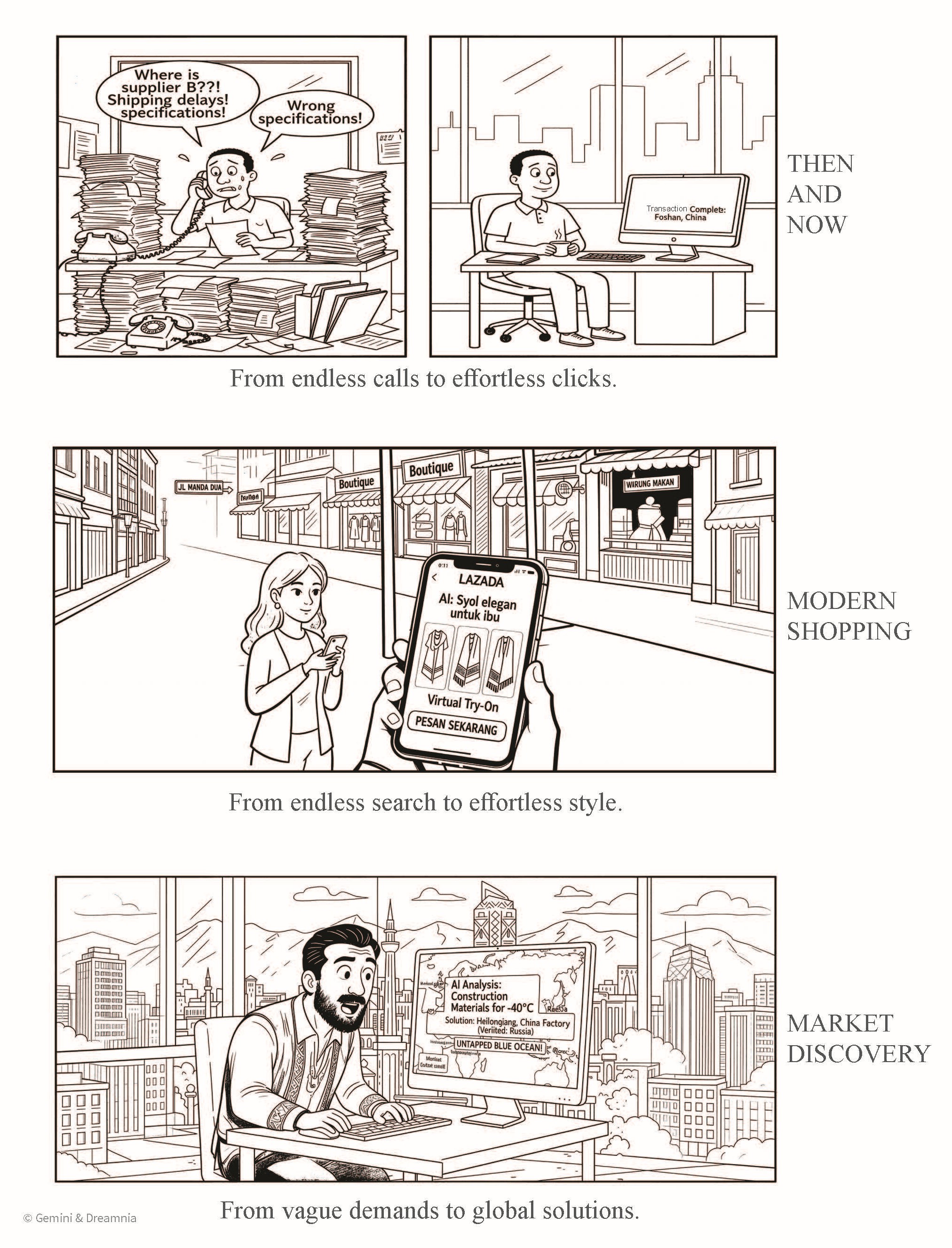
In the age of intelligent agents, the rules of the game are being rewritten. The basis of commercial competition is shifting from capturing human attention to earning the trust of AI systems that interpret and evaluate data.
Acting as a proxy for the user, AI tends to base its judgements and decisions on the rational analysis of structured, machine-readable product data rather than on eye-catching marketing. In other words, a product's digital profile, including its precise technical specifications, compliance certifications and details of compatibility, can matter more than any advertisement.
These shifts are already prompting a number of adjustments. The centre of online traffic is moving from the search box to AI-driven conversational interfaces. Within these interfaces, recommendations, summaries and direct links can guide users through the purchasing process, making so-called "zero-click" transactions increasingly possible. Also, established commercial dynamics are beginning to change. The traditional logic of brand premiums is being challenged, and relying solely on brand visibility may become less effective. Instead, platforms and merchants are paying closer attention to whether their data can be easily interpreted by AI and whether product information is presented in a more transparent and structured way. In this context, making data "AI-friendly" may well become a new threshold for participating in digital trade.
Growth of Emerging Markets
Although the underlying logic is similar, Southeast Asia, Central Asia, and Africa differ significantly in market fundamentals and consumer habits, and their AI-enabled growth paths are also distinct.
Southeast Asia has become one of the regions where the integration of AI and cross-border e-commerce is most advanced. Building on a well-established consumer internet ecosystem, AI tools are woven into stages of transactions and business operations. Through everyday use, these tools interact and reinforce one another, creating a self-sustaining cycle of growth.
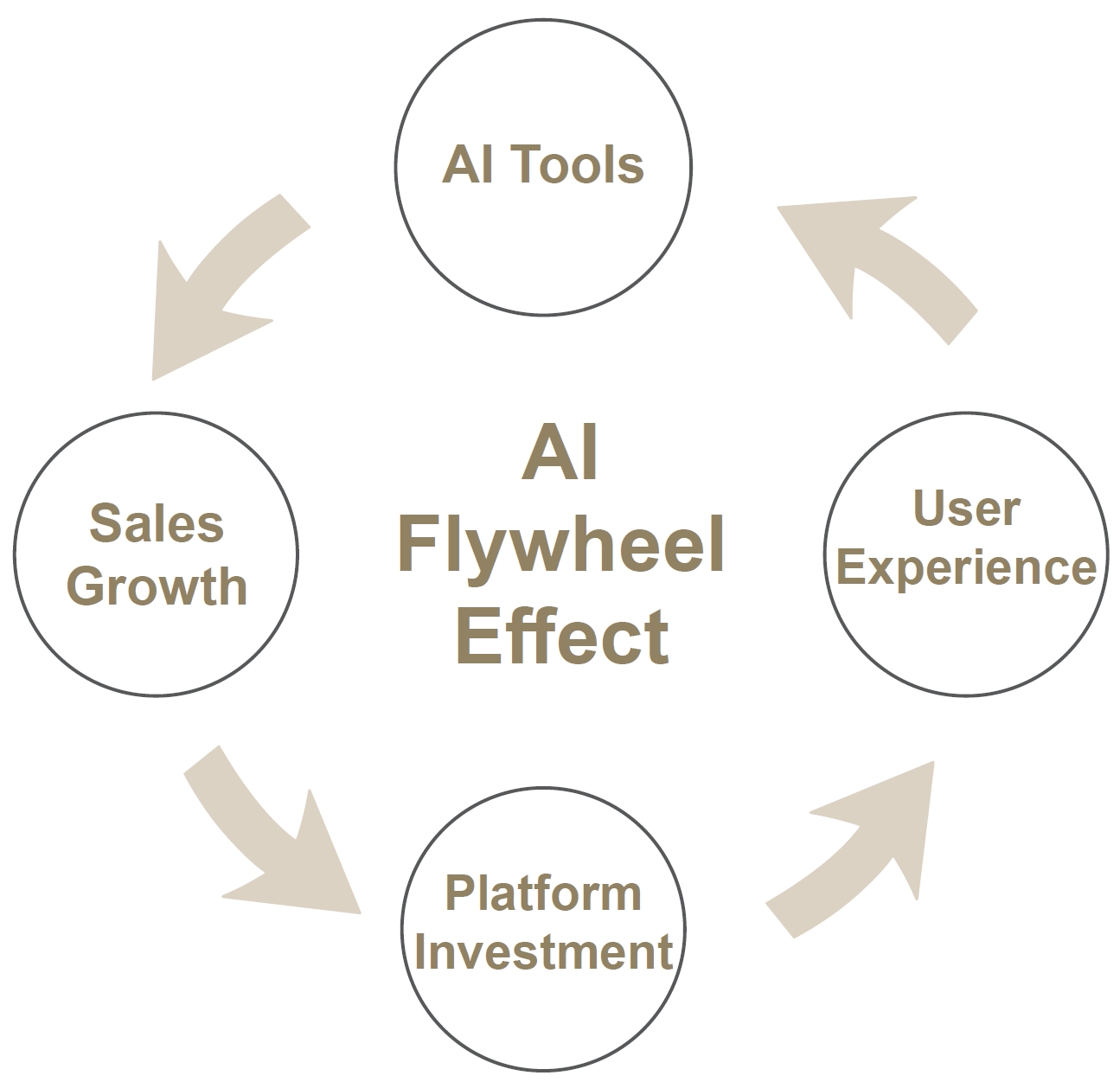
A large population of young internet users and high levels of mobile connectivity have created fertile ground for AI applications. Some e-commerce platforms, such as Lazada, have introduced AI shopping assistants that offer personalised recommendations and virtual try-on features, helping consumers make decisions more easily. These tools are not particularly complex, yet they subtly improve the shopping experience and make the path to purchase smoother.
On the seller side, AI tools covering the entire process, from intelligent product listing and customer communication to cross-language services, are gradually being integrated into everyday operations, improving efficiency for merchants. A powerful cycle begins to take shape: AI improves efficiency, better experiences encourage purchases, sales grow, and the gains are reinvested in further AI development.
In Central Asia and parts of the Belt and Road region, developments tend to follow a more industry-oriented path, centred on business-to-business cooperation. Here, supply chains provide the backbone, while emerging digital infrastructure is increasingly used to address long-standing challenges of trust and efficiency in cross-border trade.
These markets hold considerable potential, but in reality, they also face severe information asymmetry and high trust costs. Some practices have explored connection methods centred on the industrial internet: by building a three-in-one digital hub integrating localised teams, physical showrooms, and overseas warehouses, transaction barriers are systematically reduced, providing "visible trust." In this process, AI is also used to organiseand interpret previously vague demand information, revealing latent blue ocean markets such as special construction materials suitable for high-temperature environments. The aggregation of such information not only helps to identify previously overlooked niche demands but also provides reference for product improvement and production adjustments. Moreover, it drives flexible manufacturing. As front-end orders gradually accumulate, the production process can be more flexibly adjusted according to actual feedback, enabling small-batch, diverse demands to be met more effectively.
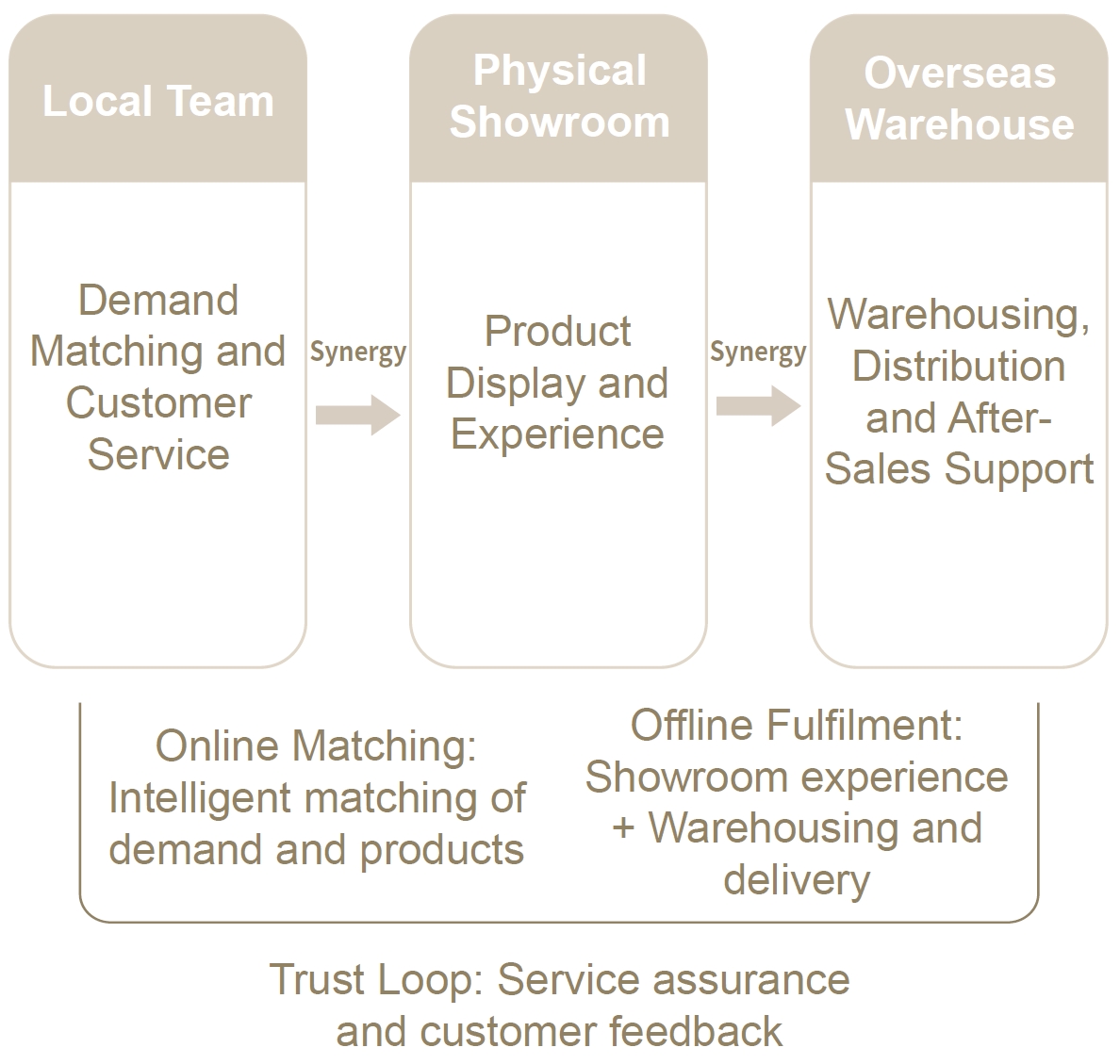
"Trinity" Overseas Operations Centre Model Diagram
Africa's markets present a more diverse picture, with a focus on leveraging AI to make vertical breakthroughs in high-value scenarios while strengthening infrastructure.
The continent's digital economy is vibrant and growing, yet fundamental conditions such as electricity, connectivity, and payment systems still present challenges. It is in this context that many initiatives have chosen to begin with specific and clearly defined use cases. Rather than attempting to build all-encompassing platforms, many efforts focus on areas where demand is concentrated, such as agricultural technology, cross-border B2B procurement, and localised financial services. For instance, AI-driven B2B platforms helps African buyers connect more directly and efficiently with factories in China and elsewhere. AI tools are also increasingly used to interpret local cultural contexts, offering insights that inform product design and service adjustments so that goods better match real-world conditions of use.
These developments do not occur in isolation. The growth of digital trade often advances alongside improvements in physical infrastructure, such as logistics and energy systems, so that, together, they gradually enable new forms of economic connection.
Successful growth models tend to rest on two essential foundations. The first is deep localisation and the building of trust. Bridging cultural divides begins with understanding and respecting local contexts, and with the relationships that grow from this engagement. No matter how technology evolves, navigating differences in culture, institutions, and markets ultimately depends on sustained, attentive collaboration on the ground.
The second foundation is data-driven supply-chain flexibility. By using AI to connect fragmented demand around the world with agile manufacturing, digital tools help organise scattered information and improve coordination across production and distribution. As these connections strengthen, markets that once operated in isolation can gradually become part of a more resilient and interconnected network.
As AI and digital trade continue to develop, the focus of discussion is also changing. Beyond the movement of goods across borders, increasing emphasis is being placed on how capabilities can take root, grow and be used long-term locally. In this process, the value of platforms, technology and training resources lies not only in efficiency improvement but also in their ability to support local talent development, promote knowledge sharing, and create positive interactions with educational systems and industrial development.
From this perspective, the experience accumulated by some developed economies and China in the cross-border e-commerce sector can be treated as open resources, combined with the practical needs of countries in the Global South, and translated and applied within a multilateral cooperation framework. Through curriculum development, skills training and institutional coordination, digital trade has the potential to become a practical path for narrowing the digital and educational divide.
Technology itself does not automatically bring inclusive growth, but under careful guidance and joint participation, it can open windows to global markets for more people. For many emerging economies, AI-driven digital trade is still in a stage of continuous exploration. The future key may lie in enabling more regions, learners and practitioners to participate in this ongoing transformation with capacity and appropriate conditions.
-
TIAN GuofengAthorExecutive Deputy Secretary-General of the China Association of Trade in Services; Director of the Global Cross-Border E-commerce "Three Centres".

- The Evolution of Agritechnology Education in Malaysia: Lifelong Learning Pathways, Government Support, Linkages to SDGs
- Learning Across Boundaries: Designing IIOE AI + Cross-Border E-Commerce Micro-Certification Course
- Insights from IIOE's Industry-Oriented Learning Initiatives
- When Trade Begins to Think: New Possibilities in Emerging Markets
- Growth is Here: Are Skills Ready?
- Digital Intelligence, Talent as the Bridge: Opening a More Inclusive Future for Global Digital Trade