City University of Hong Kong — Students' Angel Investors: HK Tech 300 Inspires Youth Innovation
unique characteristics in the world map of technology and innovation. Stanford University, located in Silicon Valley, has not only nurtured many Nobel Prize winners but is also good at transforming research breakthroughs in the laboratory into market-recognised products, thus incubating many unicorn enterprises. Singapore, on the other hand, is known for its rigorous academic tradition and has been steadily promoting industrialisation under the premise of ensuring the quality of scientific research. Shenzhen has shifted its path, with its technology manufacturing industry developing much faster than R&D at local institutions, thus attracting many China's top-ranked institutions to set up research institutes and reach out to the industry. [1]
Hong Kong and the City University of Hong Kong (CityUHK) are working in tandem to attract talent, conduct industrial research, and efficiently utilise the advantages of their location to realise the industrial transformation of university achievements.. As Professor Freddy Boey, President of the CityUHK, said in an interview with Xinhuanet, "We need to change the model of the CityUHK to work closely with companies to move faster from basic research to industrial practice. I hope that in the next ten years, CityUHK will build such a platform, so that young people will not only dare to innovate, but also have the ability to start up startups, forming an entrepreneurial ecosystem of 1,000 people. At the same time, we will also strengthen cooperation with overseas universities to establish a 'high-speed corridor' connecting Hong Kong with the world, and then radiating from Hong Kong to the Mainland." Such a unique vision and perspective has brought CityUHK a different model of nurturing in the Greater Bay Area. [2]
Fostering Innovative and Entrepreneurial Talents
A "passionate inventor", Professor Freddy Boey's career has been characterised by a dedication to turning Deep-Technology into practical applications. From cardiovascular therapies to surgical transplants, he has not only founded companies to commercialise his technologies but has also contributed to the advancement of research and competitiveness of the materials engineering discipline during his tenure at the National University of Singapore (NUS). During his tenure at NUS, he has brought about a quantum leap in the level of research and competitiveness of the Materials Engineering discipline. Since joining the CityUHK, he has promoted the Master of Science in Venture Creation programme, the establishment of CityUHK Academy of Innovation, CityUHK Institute of Digital Medicine, as well as Hong Kong Institute of Al for Science, which focuses on research and work in the area of "AI for science". He firmly believes that "Hong Kong needs a large number of start-ups, and even though most of them may fail, the successful few will provide well-paying jobs for Hong Kong's local young people and mainland students."
Instead of focusing on producing a few unicorns or turning a profit, universities encourage R&D locally and assist the establishment of businesses in order to create a virtuous cycle of talent development. The foundation of a sustainable R&D ecosystem, which is essential to the steady development of a nation or city, can be established over ten years by nurturing 50 to 60 young entrepreneurs annually.
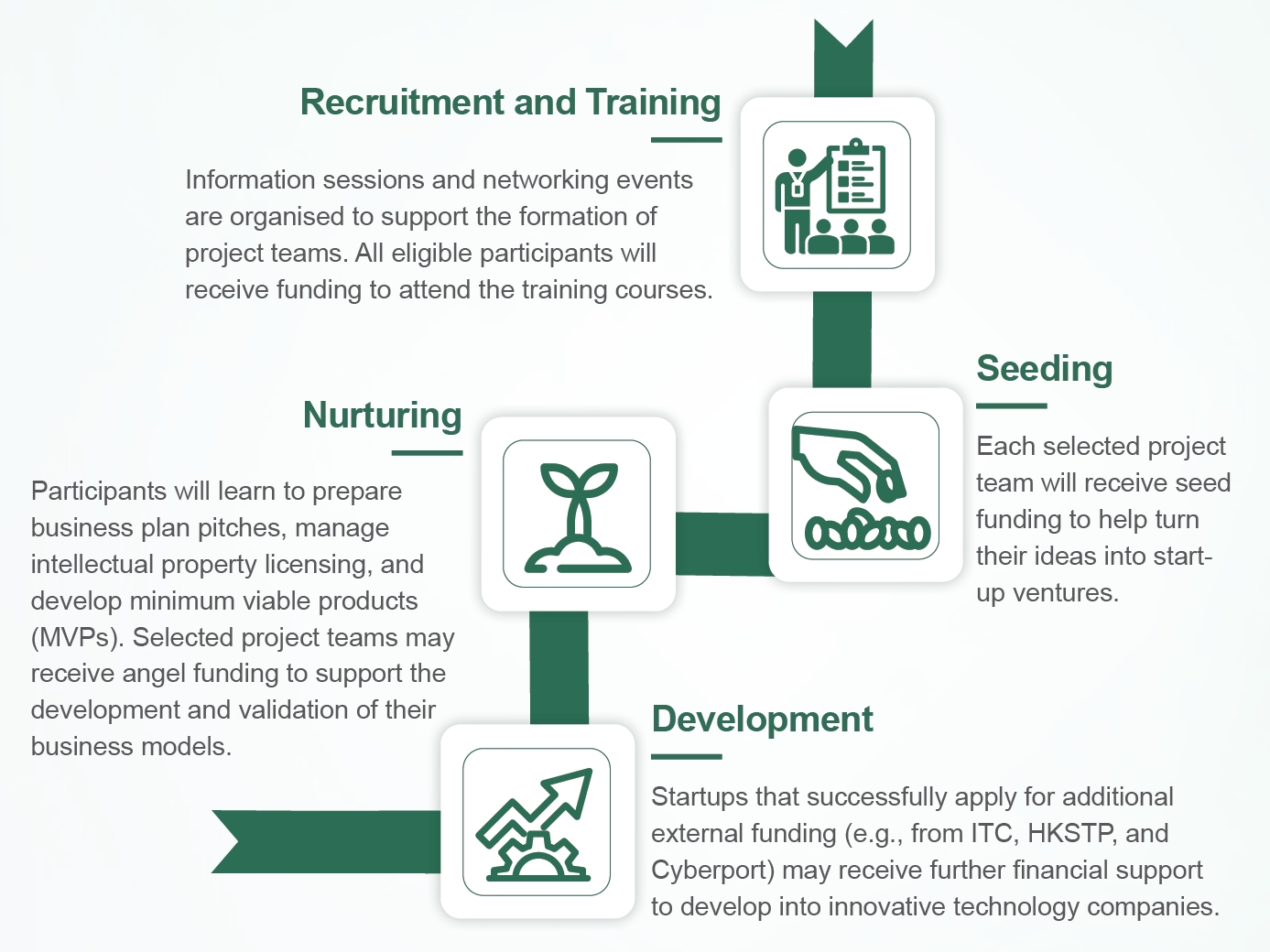
The quest to realise this vision begins in 2021. "HK Tech 300" is a CityUHK-organised entrepreneurship programme that offers funding, networking, platforms, and research assistance at five distinct stages of project maturity, namely, free team formation, training, seeding, nurturing, and development. Deacon, the founder of GABES, a smart fire emergency response system, acknowledges that the founding team, mostly made up of school students, benefited from the seed funding and angel investment provided by CityUHK, which accelerated the product development and application, and successfully launched the product overseas with the support of the university. [3] Taking Vitargent (International) Biotechnology Limited (Vitargent), a recipient of CityUHK funding, as an example, the company is a pioneer in the field of chronic and acute toxicity testing technology by utilising CityUHK-authorised "transgenic medaka fish" and "zebrafish" embryos. Its clients include global major cosmetics and skincare companies, food companies, leading testing laboratories and government departments. Since 2021, the "HK Tech 300" programme has trained over 1800 aspiring entrepreneurs and incubated more than 740 start-up projects, of which over 190 start-up companies have received up to HK$1 million from angel funds or venture capital investment.
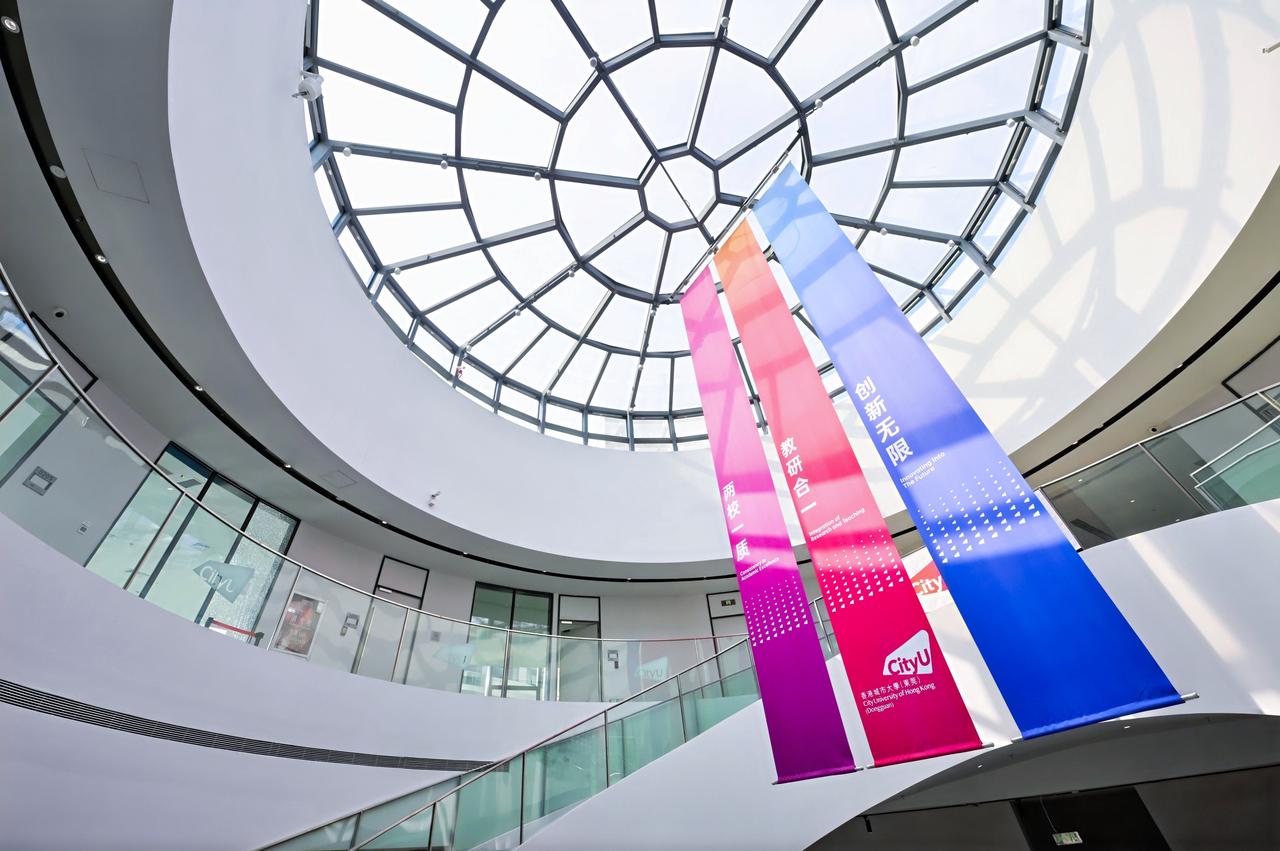
According to CityUHK's Strategic Plan 2025-30: Innovating into the Future, CityUHK will place greater emphasis on transforming the campus into a dynamic Sandbox - setting themes oriented towards solving social problems, providing students with ample exploration environment and development space, and better supporting the germination and growth of students' ideas. Through the establishment of interdisciplinary research institutions and leveraging the university's sandbox function, students can drive the transformation of individuality in areas such as digital health, artificial intelligence, and materials science.[4]
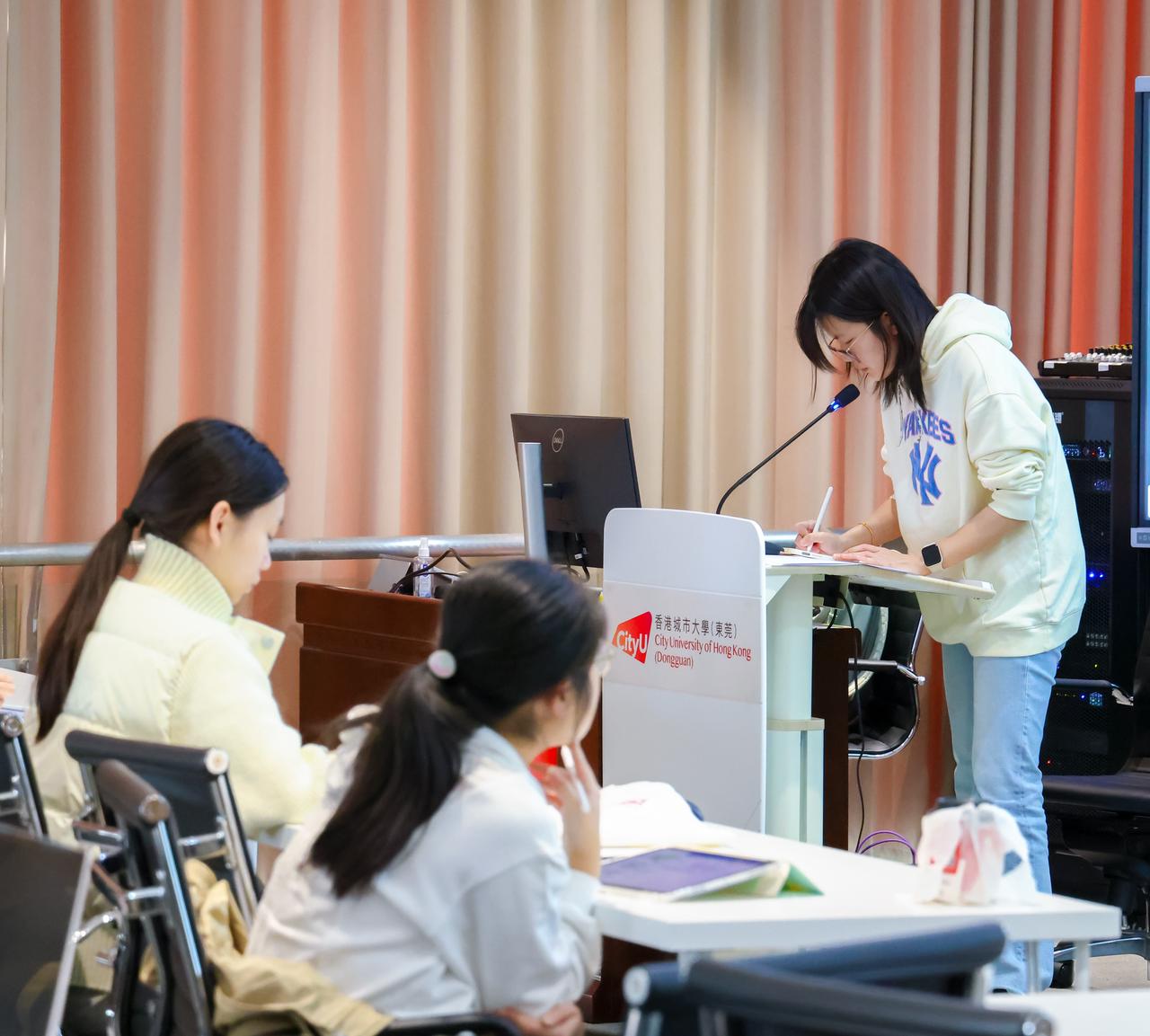
Classroom scene of CityUHK
Successful entrepreneurship often starts with a keen insight into market demands or a deep understanding of the issues that need to be resolved.. CityUHK's education reform is centred on its Discovery-Enriched Curriculum (DEC). Whether in the arts, sciences, or law, the programme encourages creative inquiry into the educational process. In the School of Law, for example, students not only refine their critical thinking, but also gain practical wisdom through diverselearning opportunities, including independent research projects, editing law reviews, and practice internships. With the help of this discovery-based learning approach, students can develop innovative solutions to real-world problems. When such a teaching model and entrepreneurship stir each other, students are endowed with more vigour and richer resource support; and this self-driven sense of achievement is like an unquenchable flame that ignites students' motivation for self-development.
The Academy for Innovation, established in 2024, is an integrated college program spanning the undergraduate, master's, and doctoral levels. This Academy aims to better assist students in understanding the business environment and business practices, excelling "discovery" beyond flashes of ideas but to take root and trasform into practical business applications. Professor YANG Michael, the senior vice president of City University of Hong Kong, stated, "With the joint efforts of the government, industry, academia, research, and investment, innovative ideas can be transformed into practical applications, providing innovative solutions to global issues and promoting social development." Professor YANG also encouraged students, saying that the courses of the Academy for Innovation are an important step in launching students' entrepreneurial and innovative journeys. Student from the inaugural classst, WU Haoxian, believes that in his current blockchain technology startup venture, he has discovered new opportunities, but he urgently needs to link with various sectors and stakeholders, in order to implement his ideas, and improve his business capabilities. [5]
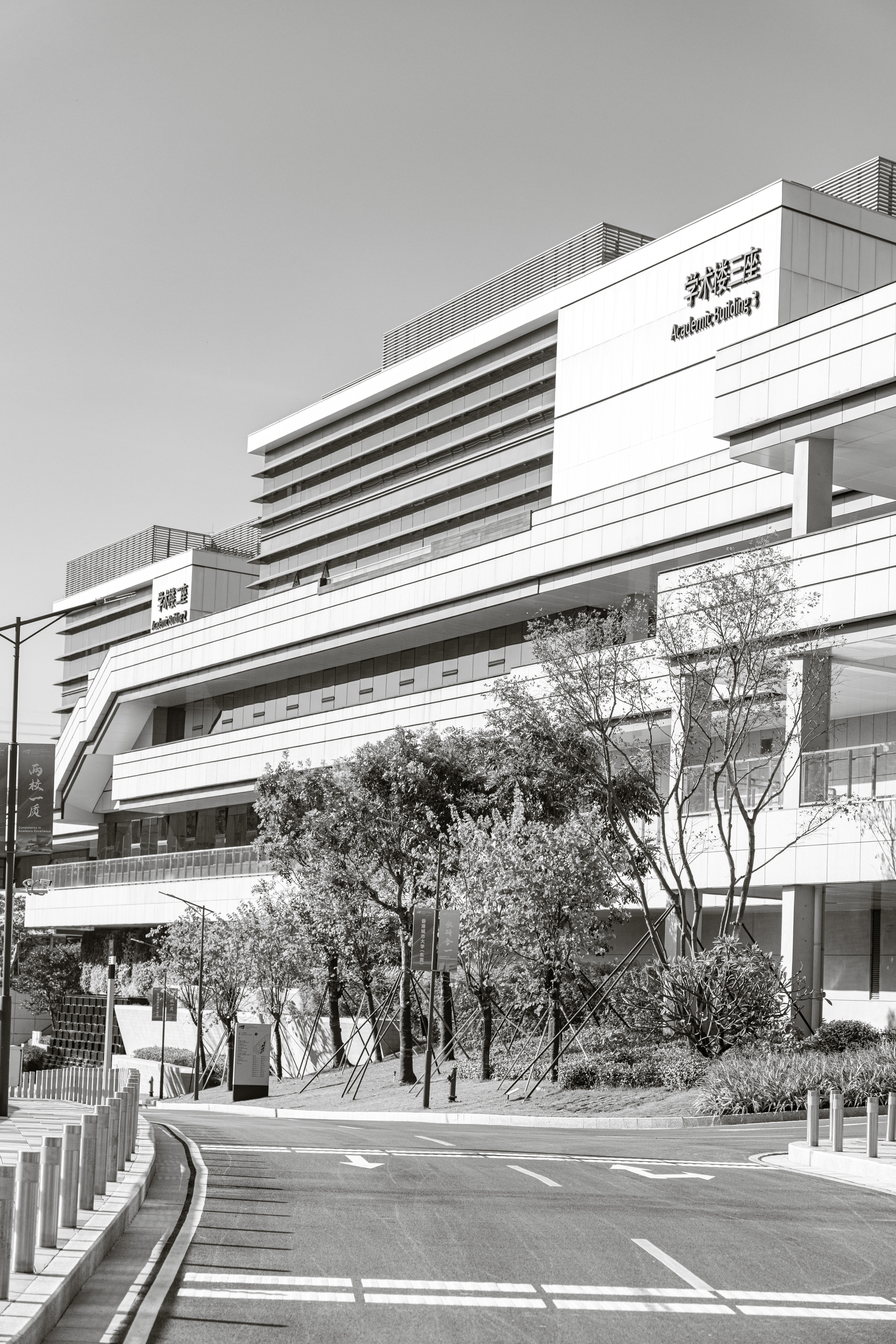
Additionally, CityUHK intends to establish an "IP Trading Platform", which will provide convenience and inject new vitality into the alumni resource network. The platform is not only committed to promoting the application of patent results, but also aims to cultivate students' ability to explore solutions to problems independently. In addition to research and development, students are given more freedom to identify problems that have commercial value, integrate resources, and collaborate with groups of CityUHK professors and PhD students to create development opportunities that can be implemented in reality.[6]
Building Science-Technology Models in the Greater Bay Area: A Two-Way Integration of the Hong Kong Model and Dongguan's Advanced Laboratory
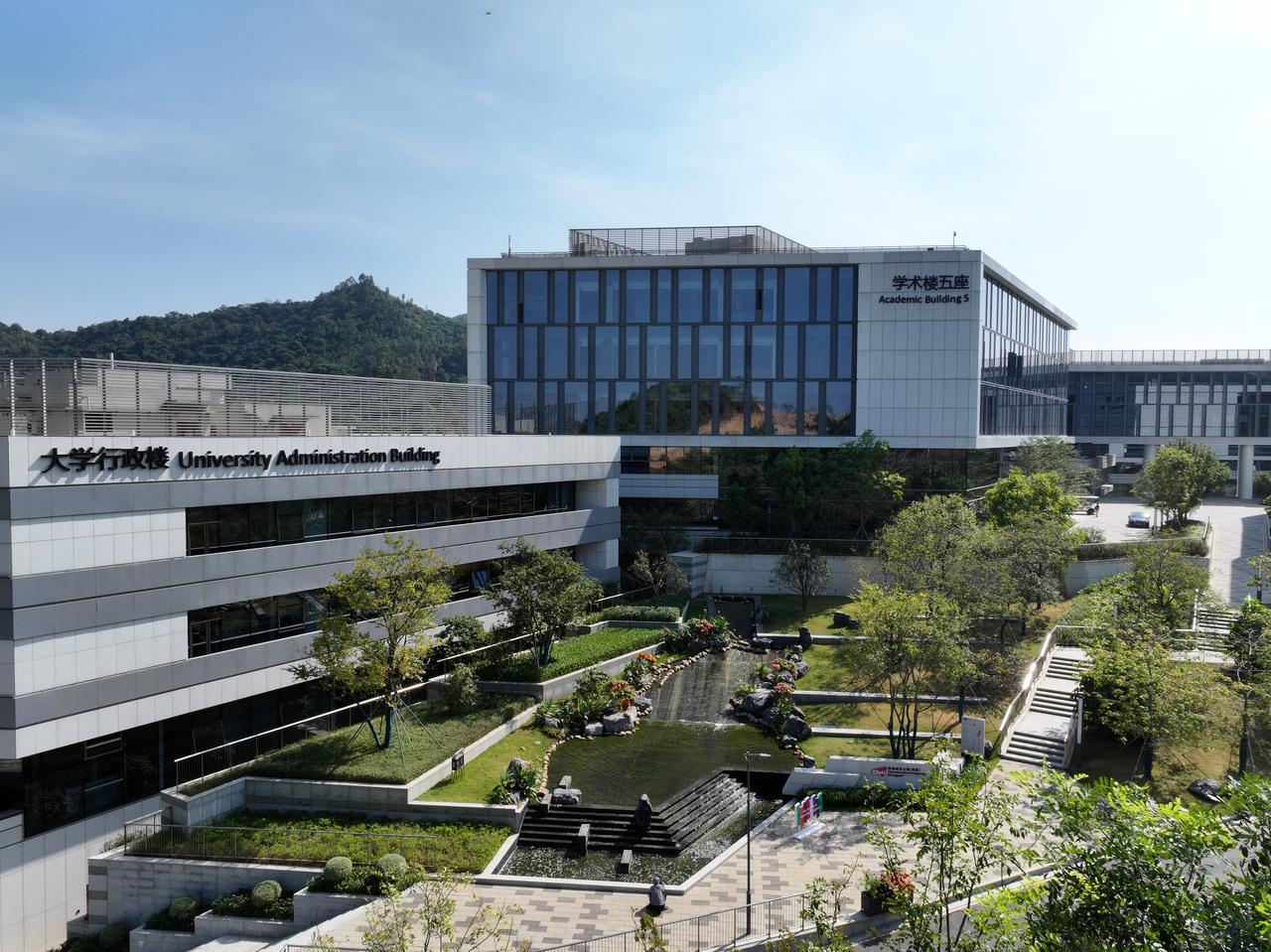
In April 2024, CityUHK brought regional resonance into a new chapter under the leadership of Vice-President (Mainland Strategy) and Executive President of City UHK (Dongguan), Chun LU, who formally set up a collaborative institution with the Mainland on the shores of Songshan Lake in Dongguan, bringing closer the distance between cities and industries.
Songshan Lake Science City, as an early start-up area for a comprehensive national science centre in the Guangdong-Hong Kong-Macao Greater Bay Area, has brought together several national scientific research infrastructures, including the Songshan Lake Materials Laboratory, the Southern Light Source Research and Testing Platform, and the Advanced Arrhythmic Second Laser, over the past year, and formed an ecology of synergistic innovation among large scientific devices, new research and development institutes, and hi-tech enterprises. The cities in the Greater Bay Area have well-developed industrial chains and strong industrial clusters, which can provide application scenarios for the transformation of scientific research results, and the advantageous resources of the two places complement each other and converge the elements of innovation. CityUHK (Dongguan) uses the faculty and training model of CityUHK's main campus to lead students from the Greater Bay Area and the Mainland to join the team of creating value for society and to link entrepreneurial forces, HK Tech 300, and industrial chains across the region in the era of accelerated development of AI.
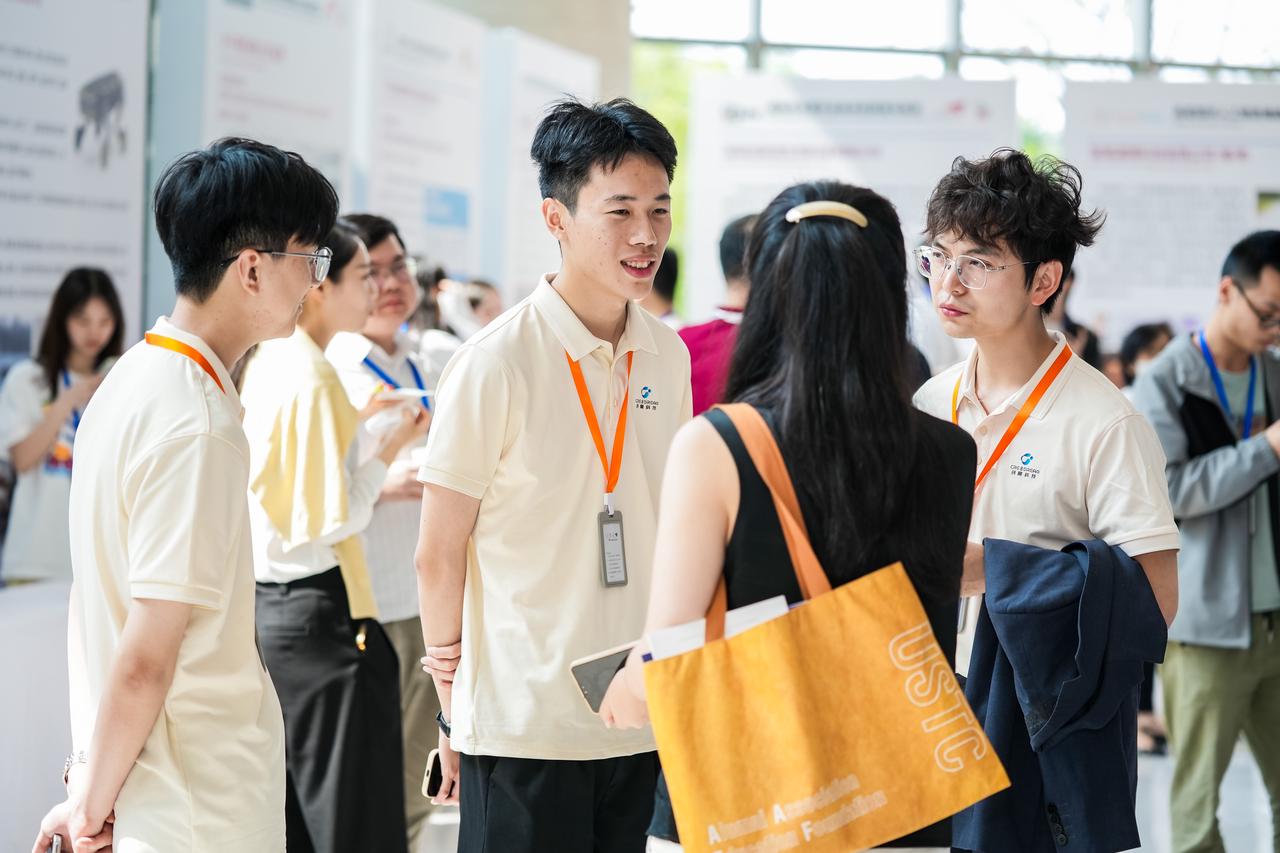
HK TECH300
This is precisely what LU Chun of the CityUHK (Dongguan) thinks: internationalised education is about developing future talents with a global perspective and cross-cultural communication skills, not just about bringing in foreign faculty and students. "By using an innovative educational model, we hope to improve students' international competitiveness and help them comprehend the various academic and cultural backgrounds throughout the world. By collaborating with top international universities and businesses, CityUHK (Dongguan) will play a significant part in this process by giving students additional chances for research, internships, and academic exchanges."[7][8] CityUHK is extending its influence and capabilities through the Dongguan Campus, further solidifying its presence in the Greater Bay Area and beyond. By establishing the Institute of Digital Medicine (IDM), excel research excellence through RAISe+ Scheme Funding (Research, Academic, and Industry Sectors One-plus Scheme), CityUHK further demonstrates global impact, forge strategic partnerships, and addresses societal challenges through collaborative innovation and research for the future society. [4]
References
[1] 灼见名家 Master Insight, “梅彦昌校长:香港如何打造创新科技产业?城大怎样推动科研成果转换? 《友「德」倾》(转载自香港中华厂商联合会,主持:史立德),” YouTube, Apr. 20, 2024. https://www.youtube.com/watch?v=lEBOte12QDI (accessed May 12, 2025).
[2] 新华网, “新华网专访香港城市大学校长梅彦昌:创新与国际化双轮驱动,打造未来大学,” 香港城市大学(东莞), Apr. 08, 2025. https://www.cityu-dg.edu.cn/node/3734 (accessed May 12, 2025).
[3] 香港城市大学, “GABES — 智慧消防应急系統 把握火灾逃生黄金时间,” 香港城市大学 HK Tech300, Aug. 2024. https://www.cityu.edu.hk/hktech300/zh-hk/start-ups/stories/gabes (accessed May 12, 2025).
[4]J. LI, et al., “Creativity and Innovation in Higher Education,” 2016. Accessed: May 12, 2025. [Online]. Available: https://www.cityu.edu.hk/ted/iche2020/%28CityU_HK%29Creativity_and_Innovation_in_Higher_Education.pdf
[5] 青塔, “全球最国际化大学基因!这所新大学,加速冲刺,” 香港城市大学(东莞), Apr. 2025. https://www.cityu-dg.edu.cn/node/3736 (accessed May 12, 2025).
[6] Z. ZHANG and C. LU, “侨瞧新时代,” 人民日报 海外网. 2025. Accessed: May 12, 2025. [Online]. Available: https://mk.haiwainet.cn/video/2025/1/3/bddf43b5-7903-4c4d-ae2f-bfaf89298cbf.mp4

- BGI College - A Frontier Institute for Industry-Education Integration: Shaping Life Science Talents in Practice
- Shenzhen University of Advanced Technology (SUAT)— Vertical Innovation and Research Transformation: SUAT Unlocks the Practical Code of “Integrating Research and Education, Bridging Industry and Academia”
- City University of Hong Kong — Students' Angel Investors: HK Tech 300 Inspires Youth Innovation
- The Hong Kong University of Science and Technology (HKUST)—— Competitions and Startup Incubators: Developing Youg Leaders with Science and Technology talent in the Greater Bay Area
- Southern University of Science and Technology (SUSTech) – Extending Classrooms to Laboratories: Cultivating Top-tier Innovative Talent Through Immersive Research