Shenzhen University of Advanced Technology (SUAT)— Vertical Innovation and Research Transformation: SUAT Unlocks the Practical Code of “Integrating Research and Education, Bridging Industry and Academia”
In Shenzhen, "industrialisation" is a deeply embedded demand in both research and education. In the future, high-tech enterprises that successfully commercialise research outcomes will become major profit-generating forces in the market. Universities and research institutions with Shenzhen's distinctive "industrial DNA" will serve as the core "factories" producing such enterprises, while also supplying talents for cutting-edge interdisciplinary innovation.
At a scientific research conference in April 2025, Shenzhen University of Advanced Technology (SUAT)—a university initiated in 2018 and officially established in 2024—showcased six cutting-edge innovations in the field of artificial intelligence during the inauguration of its "AI+Industry Innovation Centre". These breakthroughs spanned areas such as large-scale models, multimodal data integration, and intelligent hardware, sparking keen interest from industry investors.What makes this new research-oriented university unique? How does it manage to swiftly translate scientific research into practical applications and nurture future-oriented talent through the integration of science, education, and industry?[1]
From Laboratory to Production Line: Building a Complete Innovation Ecosystem
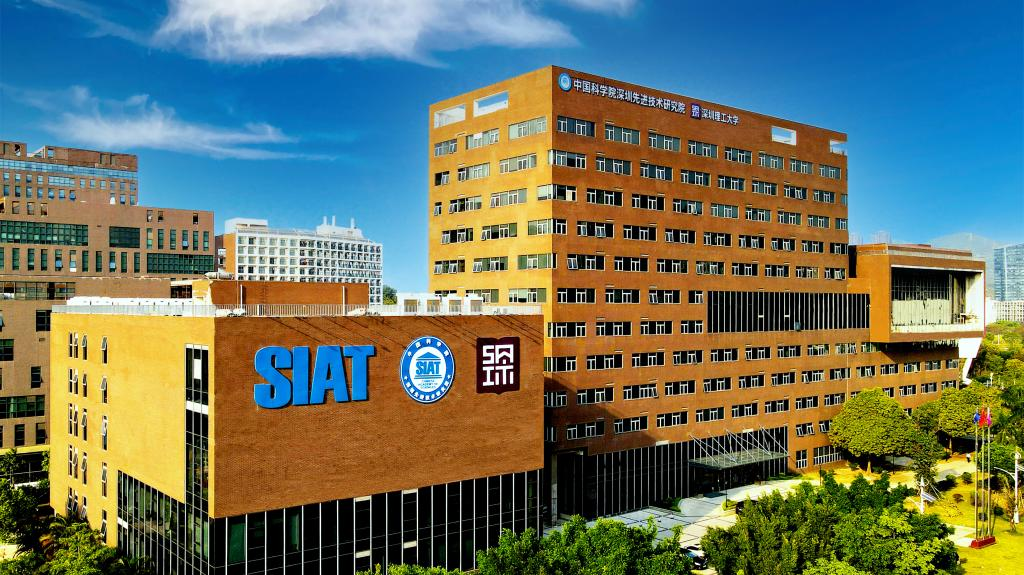
SUAT was founded with a unique background. Backed by top-tier research institutions such as the Shenzhen Institutes of Advanced Technology (SIAT) under the Chinese Academy of Sciences, the university is committed to constructing a full-cycle innovation ecosystem that spans basic research, technological breakthroughs, industrialisation of results, tech finance, and talent development—deeply integrating science, industry, and education.
By developing platforms such as proof-of-concept, pilot-scale testing, and industry innovation centres, SUAT accelerates the transformation of scientific achievements, ensuring that innovation doesn't stop at the lab bench. For instance, the Faculty of Synthetic Biology, co-established with the National Centre of Innovation for Biomanufacturing, is dedicated to translating synthetic biology research into market-ready applications, serving sectors such as biopharmaceuticals and green manufacturing.
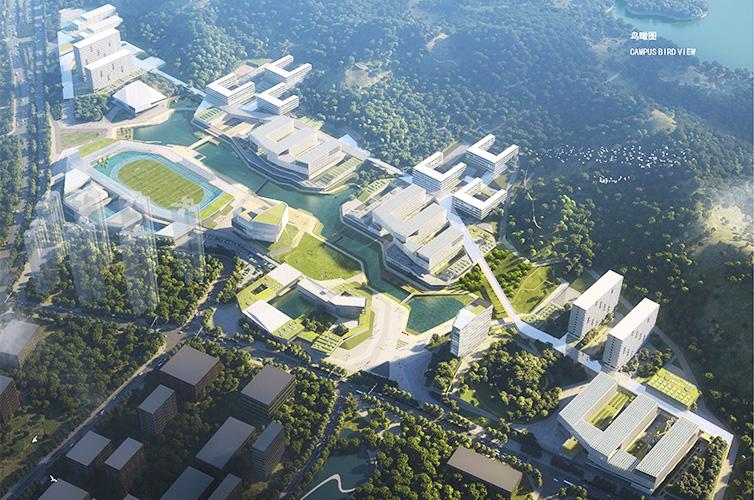
"Innovation is constantly driven by the evolving demands of industrial chains—when something is missing in the chain, we conduct research to fill that gap," said Jianping FAN, President of SUAT. "At the same time, we continue to explore new strategies to address bottlenecks and pain points in industry, deepening the integration of innovation and industry chains. Our growth is symbiotic with the city of Shenzhen."[2]
In 2022, even during its preparatory phase, SUAT had already achieved impressive results. Shanghai United Imaging Healthcare Co., Ltd., in collaboration with SIAT, completed China's first 3T human magnetic resonance imaging (MRI) system after years of joint research—marking a significant breakthrough in the development of high-end medical equipment. [3]
"From theoretical prototyping to product validation, and finally applying the technology to MRI systems for real-world clinical use, the process required years of refinement," shared Chao ZOU, a member of the project team. [4] The project began in 2009, and many team members joined as master's or doctoral students — or fresh graduates — and have since grown into nationally recognised talents.
In the medical field—where research rigour and industrial collaboration are paramount—students and early-career researchers gained hands-on experience tackling urgent industry needs. This project resulted in over 500 patents, with more than 40% patents successfully commercialised.
This innovative model in the field of medical devices is called the "Butterfly Model" by SUAT. It involves collaborative innovation among SUAT, SIAT, national technology innovation centres, and other stakeholders to build a robust innovation ecosystem. Research institutes and universities serve as the "nerve centre", equipment and open platforms act as the "butterfly body" supporting the development of enterprises, national technology innovation centres and industrial parks play an innovative role as the "butterfly tail", and the market and policy environment act as the "butterfly wings", achieving the "metamorphosis" from scientific research to industry. [5]
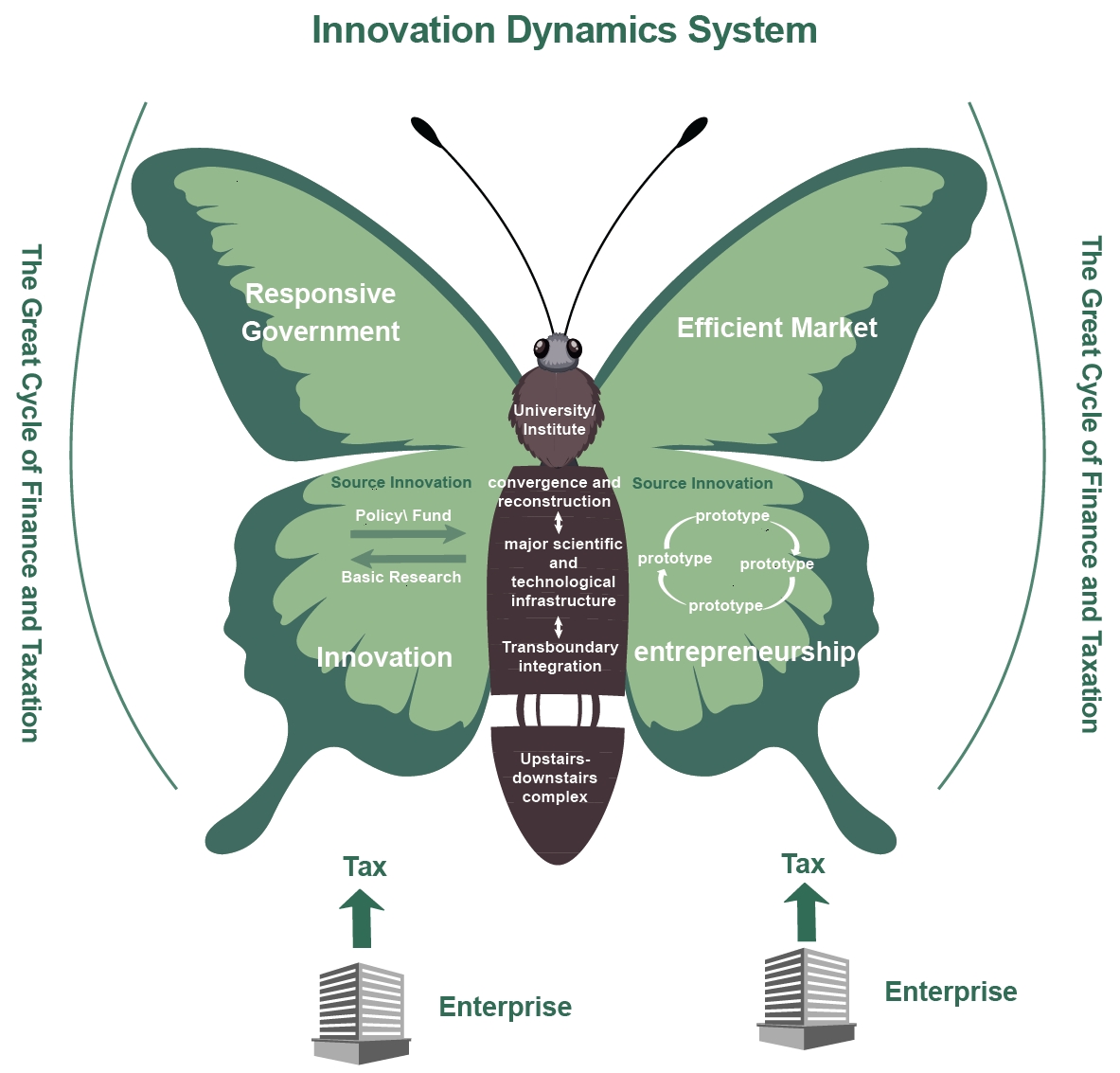
the "Butterfly Model" at SUAT
Talent Development Rooted in Original Innovation
The innovation path of SUAT is driven by deep integration with industry and interdisciplinary collaboration. Students grow into researchers through hands-on projects, with teaching based on real-world industrial challenges and research anchored in practical value. [2]
At the same time, many industry-driven disciplines are inherently cross-disciplinary. SUAT adopts a flexible "academia–engineering–entrepreneurship" model, which not only provides freedom for the growth of talents, but also sets the cultivation goals for versatile talents.
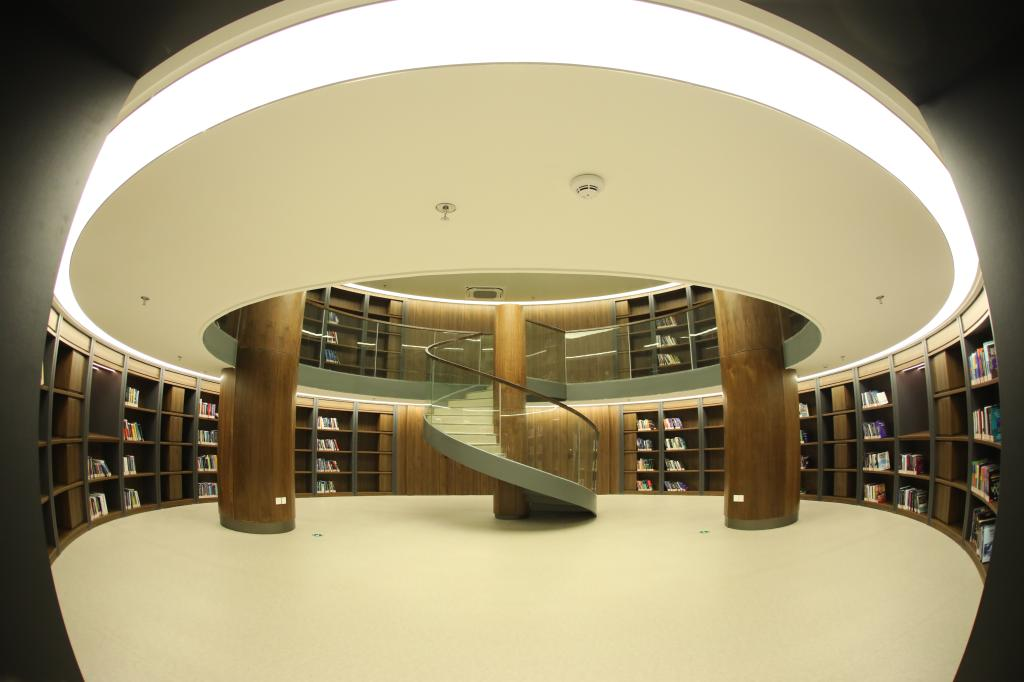
SUAT encourages joint laboratories and collaborative projects with industry, alongside incubation mechanisms and industrial park development. SUAT champions a "no science–engineering divide" philosophy—blurring traditional STEM boundaries and empowering students to tackle problems through cross-disciplinary thinking and frontier innovation.
According to Academician Yi PAN from the Faculty of Computer Science and Control Engineering at SUAT, the faculty aims to cultivate AI professionals equipped with solid subject expertise. Guided by the concept of "knowledge empowerment", "the Faculty seeks to embed disciplinary knowledge into large models, creating meaningful intersections between academic fields and artificial intelligence[6]".
Meanwhile, Professor Jinlin TANG, Head of the Department of Computational Biology and Medical Big Data, emphasises that in today's computer-driven era, students must possess a spirit of inquiry and the courage to question assumptions. They are encouraged to think critically and solve problems independently. University lecturers, he notes, serve as the paving stones—leading, guiding, and passing on not only professional knowledge but also the resilience and spirit that transcend disciplines [7].
Facing the Future: the Ability of Self-motivation and Exploration are Keys
Recently, SUAT has started the recruitment for undergraduate student for the class of 2029. In line with the era of AI, Prof. Fan Jianping and Professor WANG Song from the Faculty of Computer Science and Control Engineering expressed their future visions respectively. FAN Jianping, in an interview with the Shenzhen TV Bay Area Living Room program, stated that SUAT is accelerating its support for students to fully their potential and interests for their future aspiration, whether it is in research, industry, or entrepreneurship, in order to cultivate scientists and innovative entrepreneurs that devotes to national strategies and their local community. Mr. WANG Song introduced that in the era AI technology, emerging industries has vast opportunities for new jobs; however, the field of AI is also developing rapidly and constantly changing, and require practitioners to learn on-the-go, with the latest knowledge in order to stand firm in the fierce competition. "We cannot diminish the momentum of exploration of young people, including their curiosity and creativity. Teachers cannot use their own experience to limit students' horizons and thinking." Students have the freedom and flexibility of course settings and sufficient opportunities for exploration in the campus environment, as well as high-quality research and course resources. Through autonomous learning and exploration, they can better pursue excellence according to their own interests. [8]
References
[1] 李丽, “深圳理工大学:‘端’出人工智能领域六大成果,” 深圳特区报, 2025. https://www.sznews.com/news/content/mb/2025-04/03/content_31524730.htm (accessed Apr. 25, 2025).
[2] 伍曼娜, “献策高质量发展!樊建平:强化创新链和产业链的三种创新实践,” 南方都市报, 2024. https://m.mp.oeeee.com/a/BAAFRD000020240219911762.html (accessed Apr. 25, 2025).
[3] 党文婷, “深圳先进院高端医学影像团队获国家科技进步奖一等奖,” 光明日报, 2025. https://www.cas.cn/cm/202111/t20211104_4812457.shtml (accessed Apr. 25, 2025).
[4] 刁雯蕙, “实现国产替代后,他们向科技‘无人区’进发,” 中国科学报, 2023. https://news.sciencenet.cn/sbhtmlnews/2023/7/375181.shtm (accessed Apr. 25, 2025).
[5] 闻坤, “‘蝴蝶模式’助力深圳打造医疗器械产业高地,” 深圳特区报, 2022. https://siat.ac.cn/siatxww/mtbd/202412/t20241220_7507109.html (accessed Apr. 25, 2025).
[6] 深圳理工大学, “深理工计算机学院希望招什么样的学生?潘毅院士这样说,” Bilibili.com, Mar. 25, 2024. https://www.bilibili.com/video/BV1tt421G7QR/?spm_id_from=333.1387.homepage.video_card.click&vd_source=e66dfcc913222bec7483ee9eb8ba1f74 (accessed Apr. 25, 2025).
[7] 深圳理工大学, “唐金陵:我们是学生的铺路石,” Bilibili.com, Jul. 09, 2024. https://www.bilibili.com/video/BV19S42197LZ/?spm_id_from=333.1387.homepage.video_card.click&vd_source=e66dfcc913222bec7483ee9eb8ba1f74 (accessed Apr. 25, 2025).
[8] 深圳理工大学,“王松:人工智能领域需要不甘平庸的创新者,”Bilibili.com, May 14, 2025. https://www.bilibili.com/video/BV1REEBzbEfD/?spm_id_from=333.337.search-card.all.click&vd_source=e66dfcc913222bec7483ee9eb8ba1f74 (accessed May 20, 2025)

- BGI College - A Frontier Institute for Industry-Education Integration: Shaping Life Science Talents in Practice
- Shenzhen University of Advanced Technology (SUAT)— Vertical Innovation and Research Transformation: SUAT Unlocks the Practical Code of “Integrating Research and Education, Bridging Industry and Academia”
- City University of Hong Kong — Students' Angel Investors: HK Tech 300 Inspires Youth Innovation
- The Hong Kong University of Science and Technology (HKUST)—— Competitions and Startup Incubators: Developing Youg Leaders with Science and Technology talent in the Greater Bay Area
- Southern University of Science and Technology (SUSTech) – Extending Classrooms to Laboratories: Cultivating Top-tier Innovative Talent Through Immersive Research