The Hong Kong University of Science and Technology (HKUST)—— Competitions and Startup Incubators: Developing Youg Leaders with Science and Technology talent in the Greater Bay Area
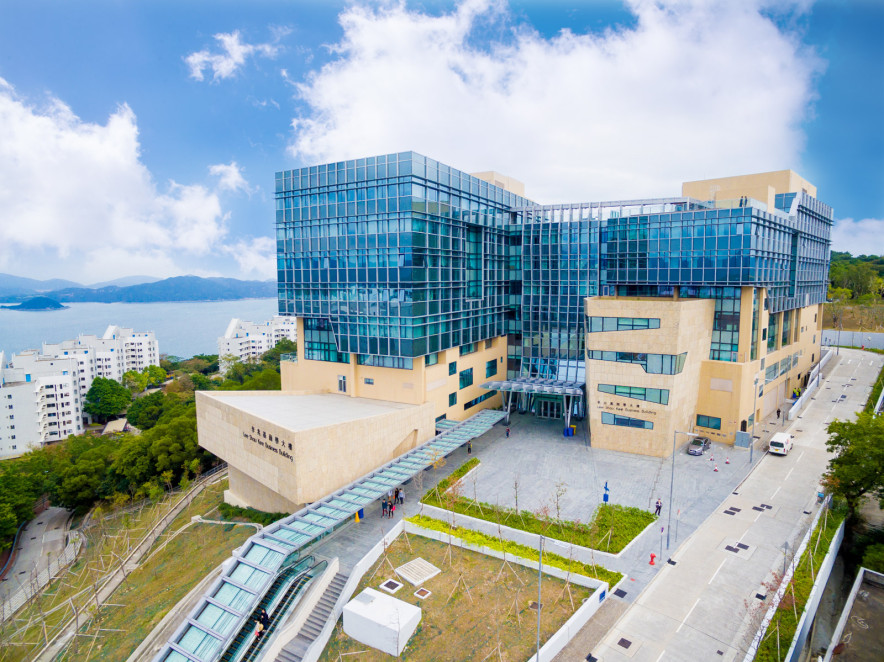
Students of the Hong Kong University of Science and Technology (HKUST) frequently make fun of Clear Water Bay in Sai Kung as a peaceful place where you can study in depth and explore extensively. Over 1800 active startups (as of May. 2025) have been subtly fostered in this pristine academic land since the establishment of HKUST in 1991. These include nine unicorn companies and thirteen new startups with successful exits (IPO or M&A), as well as industry leaders like DJI, which controls 80% of the global market share, their combined economic value exceeds HK$400 billion; Pudu Robotics, a unicorn company, designs, develops, manufactures and sells robots in 60 countries and regions; ChargeSpot, the world's largest multinational mobile power sharing platform, has been listed in 2022. With a market share of roughly 80% of the worldwide market, DJI is already a major player. The outcomes of scientific research are quite difficult to implement in the market, caught in the "valley of death" between academia and the business sector, even though many universities focus on encouraging innovation and entrepreneurship. This raises the question of what HKUST'S beliefs and procedures are that help students and graduates avoid these "valleys of death"?
Startups Grow Up in a Project—— One Million Dollar Entrepreneurship Competition Becomes an Incubator
Preparing individuals to work and prosper in the future society is one of the main challenges of higher education. Globally, some universities are dedicated to producing professionals who can "adapt to the workplace," while others seek to produce trailblazing entrepreneurs who can "open up new horizons." With its advanced exploration of curriculum, institutional setup, student support, and other areas, HKUST is unquestionably in the latter group. Professor Yike GUO, the Principal Vice-President and Chair Professor of Computer Science and Engineering at HKUST, stated in an interview that HKUST has successfully incubated 10 unicorns and ranked second in China in terms of incubation capacity of Shenzhen technology unicorns by New Fortune in 2022, with the three unicorns having a total valuation of RMB 233.35 billion. As of early 2024, one-third of HKUST's patents have been licensed to third parties, a licensing ratio comparable to that of the world's top research institutions.
The entrepreneurial ecosystem is meticulously responsible for this accomplishment.

The HKUST-SINO One Million Dollar Entrepreneurship Competition 2024
"One Million Dollar Entrepreneurship Competition" has produced a large number of unicorns and startups. Established in 2011 at the Clear Water Bay campus in Hong Kong, the competition is an independent brand of the HKUST. Since 2016, it has spread to several mainland cities, including Shenzhen, and has drawn over 1,000 teams annually, nurturing many teams with business prospects. Industry leaders like DJI, EcoFlow, and NARWAL have all started their first step on this stage. HKUST continues to connect entrepreneurial projects with resources like industry, capital, technology, and talent in order to create the next commercially viable enterprise.
Such entrepreneurship competitions are known for their 'realism'. Students and entrepreneurs are constantly encouraged to find solutions on their own, while the institutions take the responsibility to build a platform by bringing together resources from all aspects to support entrepreneurs continuously. In addition to encouraging students to make technological advancements, schools and mentors are shedding their traditional roles as teachers and taking on the roles of "angel investors" and "entrepreneurial guides." They also help students' entrepreneurial ideas become viable businesses that can generate revenue through proof-of-concepts, vertical thematic incubation, and accelerators. From knowledge transfer to 'venture capitalists' and connecting the dots, the core competencies that schools and professors are looking for in their students are more like the emotions and mindset that successful entrepreneurs should have, whether they have a big goal, whether they are able to gather a group of people, and whether they are brave enough to take risks. [5]

© unsplash
The 'Godfather' of DJI, Professor Zexiang Li, is a professor at the Department of Electrical and Computer Engineering of HKUST, a business mentor, and a successful entrepreneur. As early as 1999, when he taught at HKUST, he founded Googol Technology, which provides leading motion control products for the interconnected smart manufacturing sector. It was this entrepreneurial experience that gave him an insight into an educational dilemma: students trained in traditional engineering disciplines are often eager to go to Silicon Valley or Wall Street, but are not interested in industrial innovation. On the contrary, what is scarce in the market is those talents who have both innovation ability and practical wisdom, and who dare to create new value with technology. Therefore, LI Zexiang began to look for a new paradigm of engineering education that better meets the needs of industry, which was later condensed into 'New Engineering' education. The core of 'New Engineering' education is to cultivate 'people who can use technology to create new things'. Behind this concept lies a profound knowledge of the laws of economic development. Development relying solely on demographic dividends is facing the challenge of change, and the only way to support the next stage of economic growth is to rely on scientific and technological innovation to reform traditional industries and transform them. [6]
LI Zexiang once explained his education philosophy - to become ‘people who create new things with technology', entrepreneurs not only need to have market insights, through market research and design thinking to discover products and verify hypotheses but also need to have the wisdom of integration, to melt technology, supply chain and other elements into product prototypes, supply chain and other elements into product prototypes. The process of creating user-oriented C-end products is an important part of the new engineering education. Based on project-based learning, students are trained to discover market demand, define products, integrate supply chain resources, and carry out product development. This industry-based engineering training model is more like the 'Big Field Model', in which students are regarded as seeds of entrepreneurship, and entrepreneurial practice is compared to a test field, where the growth cycle of entrepreneurship is monitored, and irrigation, fertilization, pest control, and weeding are carried out at the right time. 'We cooperate with schools to carry out new engineering education, start selecting entrepreneurial talents from freshman year or even earlier, interact with entrepreneurs in depth, take them to internships in startup companies, participate in all kinds of exhibitions, inspire them to discover business opportunities and put them into practice, and participate in their entrepreneurial process in depth, to help them grow up from zero.' To a certain extent, this also reflects Professor Li's philosophy of cultivating top-notch talents - to create fertile soil for innovation, so that outstanding talents can grow naturally. In this carefully plowed 'experimental field', breakthrough innovative talents will eventually achieve their goals and succeed. [7]

Inspired by the comparative study of Silicon Valley and the Guangdong-Hong Kong-Macao Greater Bay Area by Woo Chia-Wei, President of HKUST's School of Creativity, Professor Zexiang Li pointed out that the Greater Bay Area's regional integration and complete industrial chain have enabled it to demonstrate unparalleled competitiveness in the field of hardware entrepreneurship. The speed of products from design, R&D to mass production is ten times that of Silicon Valley, while the cost is one-tenth of Silicon Valley. This amazing efficiency advantage is vividly evidenced on the Kickstarter enterprise crowdfunding website - companies that make good use of the supply chain in the Guangdong, Hong Kong and Macao Greater Bay Area are able to deliver their products, while the success rate outside the Greater Bay Area is only 25 per cent. [8]
In the face of the artificial intelligence era, HKUST has once again shown its wisdom by operating schools with strong industry ties and establishing industrial AI research centers in a variety of industries and fields, including AI for Fashion, AI for Sustainability, AI and Entrepreneurship, Art and Machine Creativity, etc. It is dedicated to using technology as the foundation to solve potential future societal issues [9]. The most immediate impact about AI on the education sector is the change in the accumulation way of knowledge. "Teach people to interact with intelligent machines to learn more quickly. Guo Yike, chief vice president of HKUST and director of the Hong Kong GAI Research and Development Centre, emphasised that AI talent training should be based on the belief that "excellent students out of the master professor," that AI is the world of the young, and that "a lot of things are students teach me." "This change is bound to happen," he said. [10]
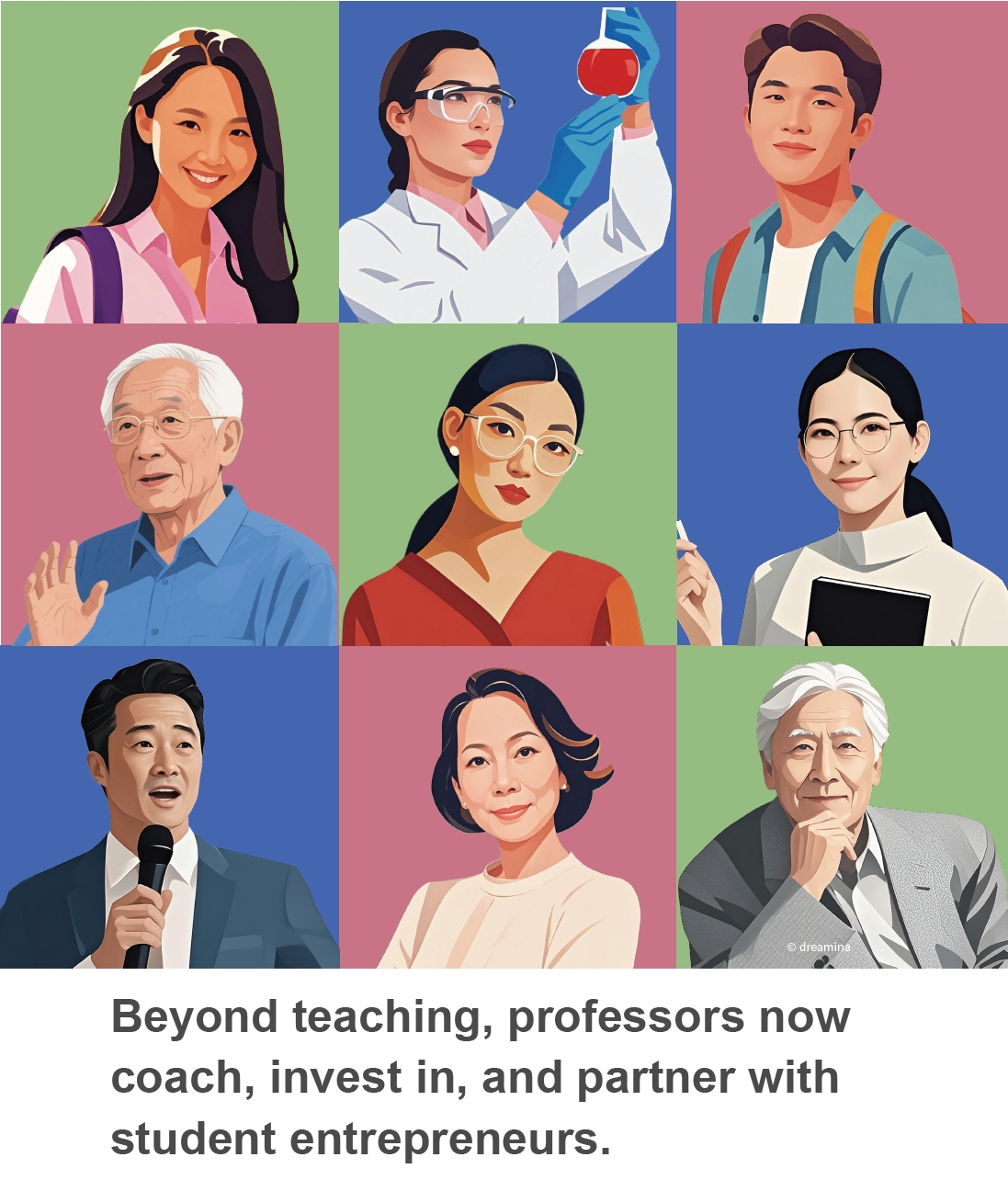
HKUST is changing university education from "imparting knowledge" to "activating creativity" through the encouragement of entrepreneurship events, the close integration of industry, academia, and research, and the full-cycle support of mentors. In addition to serving as teachers, professors now serve as "coaches," "investors," and "partners" for students as they pursue entrepreneurship. In practice, HKUST has interpreted the Book of Rites' assertion that "teaching and learning are mutually reinforcing" as follows: cooperation, trust, and failure are used to rebuild the boundaries between teaching and learning.
References
[1] https://m.mp.oeeee.com/a/BAAFRD0000202412251038395.html
[2] https://www.stcn.com/article/detail/760582.html
[3] https://hkust.edu.hk/zh-hans/news/hkust-launches-redbird-innovation-fund
[4] https://hkust.edu.hk/zh-hans/innovation-and-entrepreneurship#figures
[5] https://zhuanlan.zhihu.com/p/21815478
[6] https://ssl.dg.gov.cn/kcj/jqrcy/cyxx/content/post_3606310.html
[7] https://zhuanlan.zhihu.com/p/21815478
[8] https://m.mp.oeeee.com/a/BAAFRD0000202412251038395.html
[9] https://hkust.edu.hk/zh-hant/news/listing?field_news_tags_target_id=6605
[10] https://news.ifeng.com/c/8c73qFAho6D
[11] https://hkust.edu.hk/
[12] https://join.hkust.edu.hk/campus-tour
[13] https://mscicsm.hkust.edu.hk/student-life/campus-environment
[14] https://mimt.hkust.edu.hk/about-us/about-us/campus-life
[15] https://kt.hkust.edu.hk/zh-hans/one-million-dollar-entrepreneurship-competition
[16] https://isd.hkust.edu.hk/academics/msc-tle
[17] https://kt.hkust.edu.hk/zh-hans/courses-programs
[18] https://ec.hkust.edu.hk/news/startups-x-investor-sxi
[19] https://kt.hkust.edu.hk/zh-hans
[20] https://kt.hkust.edu.hk/zh-hans
[21] https://hkust.edu.hk/news/chat-hkgai-v1-hkust-introduces-first-homegrown-ai-tool-drive-innovative-education#
[22] https://hkust.edu.hk/news/hkgai-showcases-new-ai-research-achievements-innoex-2025

- BGI College - A Frontier Institute for Industry-Education Integration: Shaping Life Science Talents in Practice
- Shenzhen University of Advanced Technology (SUAT)— Vertical Innovation and Research Transformation: SUAT Unlocks the Practical Code of “Integrating Research and Education, Bridging Industry and Academia”
- City University of Hong Kong — Students' Angel Investors: HK Tech 300 Inspires Youth Innovation
- The Hong Kong University of Science and Technology (HKUST)—— Competitions and Startup Incubators: Developing Youg Leaders with Science and Technology talent in the Greater Bay Area
- Southern University of Science and Technology (SUSTech) – Extending Classrooms to Laboratories: Cultivating Top-tier Innovative Talent Through Immersive Research