Southern University of Science and Technology (SUSTech) – Extending Classrooms to Laboratories: Cultivating Top-tier Innovative Talent Through Immersive Research
In March 2025, a team of postgraduate students from the Department of Mechanical and Energy Engineering at Southern University of Science and Technology (SUSTech) published their paper on sodium-ion battery research. Their findings captured attention when featured in the Science Times, drawing significant industry interest. These substantive research results entered the corporate radar. Looking back at their development journey, these students actively participated in research projects led by their mentors, which cultivated their research capabilities and helped them to go faster and further in their studies and research paths.[1]
In the spring breeze of China's higher education reform and development, Shenzhen, a city of innovation, has nurtured the pioneering SUSTech. As a young and dynamic research-oriented university, SUSTech integrates the rigour of science and engineering with the vitality of the humanities. With science, engineering, and medicine as its core pillars, SUSTech also fosters the collaborative development of business studies and distinctive humanities and social sciences. As of late 2024, around 5,300+ undergraduates and 6,700+ postgraduates explore innovation and pursue their ideals within its walls[2].
Educational Philosophy and System that Breaks Departmental Barriers
SUSTech adheres to a "student-centred growth" educational philosophy, breaking through traditional barriers between departments to construct an integrated system that combines general and specialised courses, education and scientific research, as well as industry and academia. Through the comprehensive implementation of innovative mechanisms such as the faculty mentorship system, residential college system, and credit-based curriculum, the university is conducting large-scale exploration and practice in cultivating innovative talents for the new era.
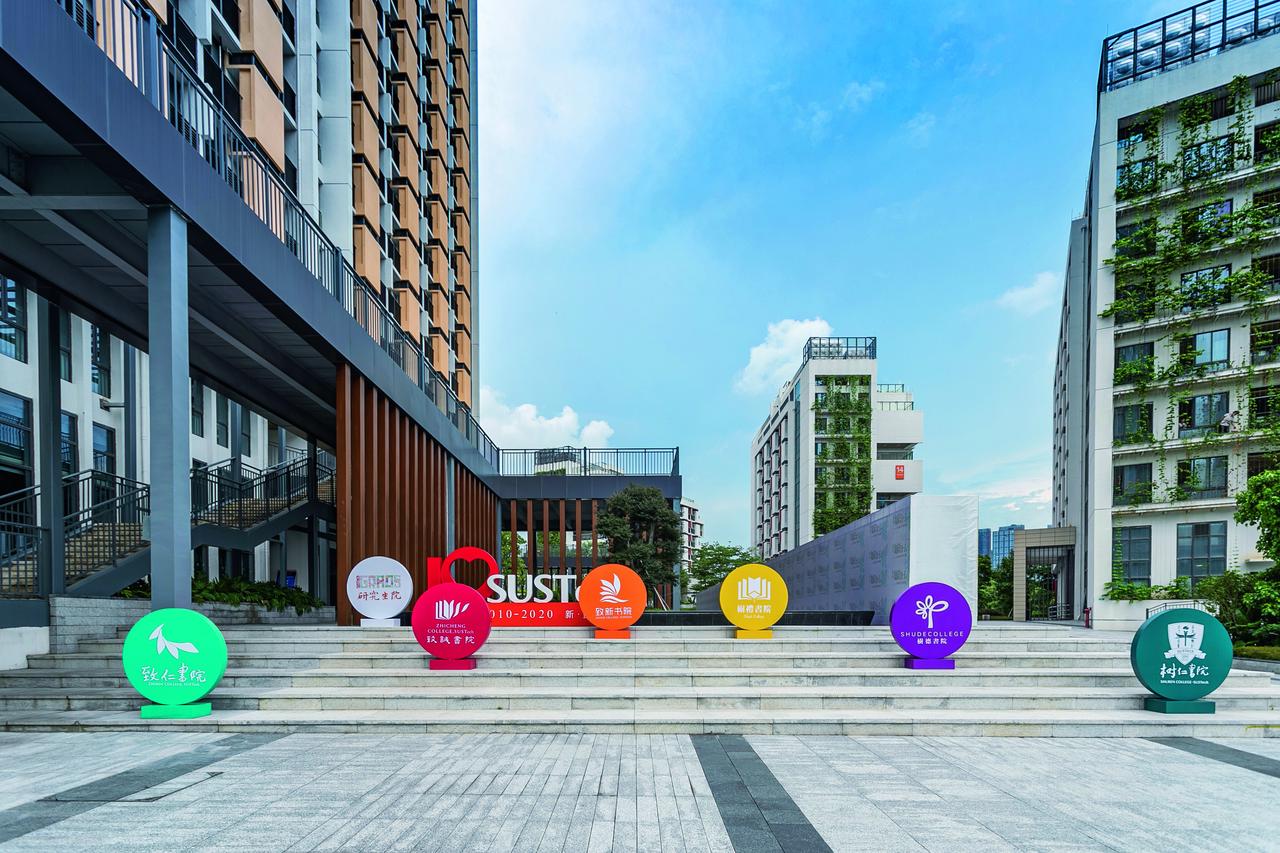
Unlike traditional universities, where majors are determined upon admission, SUSTech has innovatively adopted a residential college system. After enrollment, students are given up to two years to explore and decide on their academic paths.
The residential colleges foster a close-knit community among students and mentors, providing numerous informal learning opportunities that complement formal teaching and coursework. This enriches students' knowledge across diverse fields and broadens their horizons, encouraging their interest in multiple disciplines. Meanwhile, the interaction between faculty members and students from different academic years also plays a vital role in shaping students’ overall competence, interpersonal skills, cultural literacy, confidence, and sense of responsibility. [3]
Principal Investigator (PI) across teaching and research tracks are allocated to residential colleges following a principle of relative balance, serving as college mentors. These faculty mentors take on the role of shaping students' character development, academic adaptation, course selection guidance, major choices, and life planning. Once students enter their specialised training phases, all undergraduates participate in academic mentors' research projects. This enhances their foundational research abilities (problem-solving, stress management, and teamwork), professional research skills (scientific hypotheses formation, data analysis), and scholarly growth potential—building a reservoir of strength for their academic careers. Within this unique system, mentors themselves become relatively independent individuals, empowered to spearhead cross-departmental collaborative research.
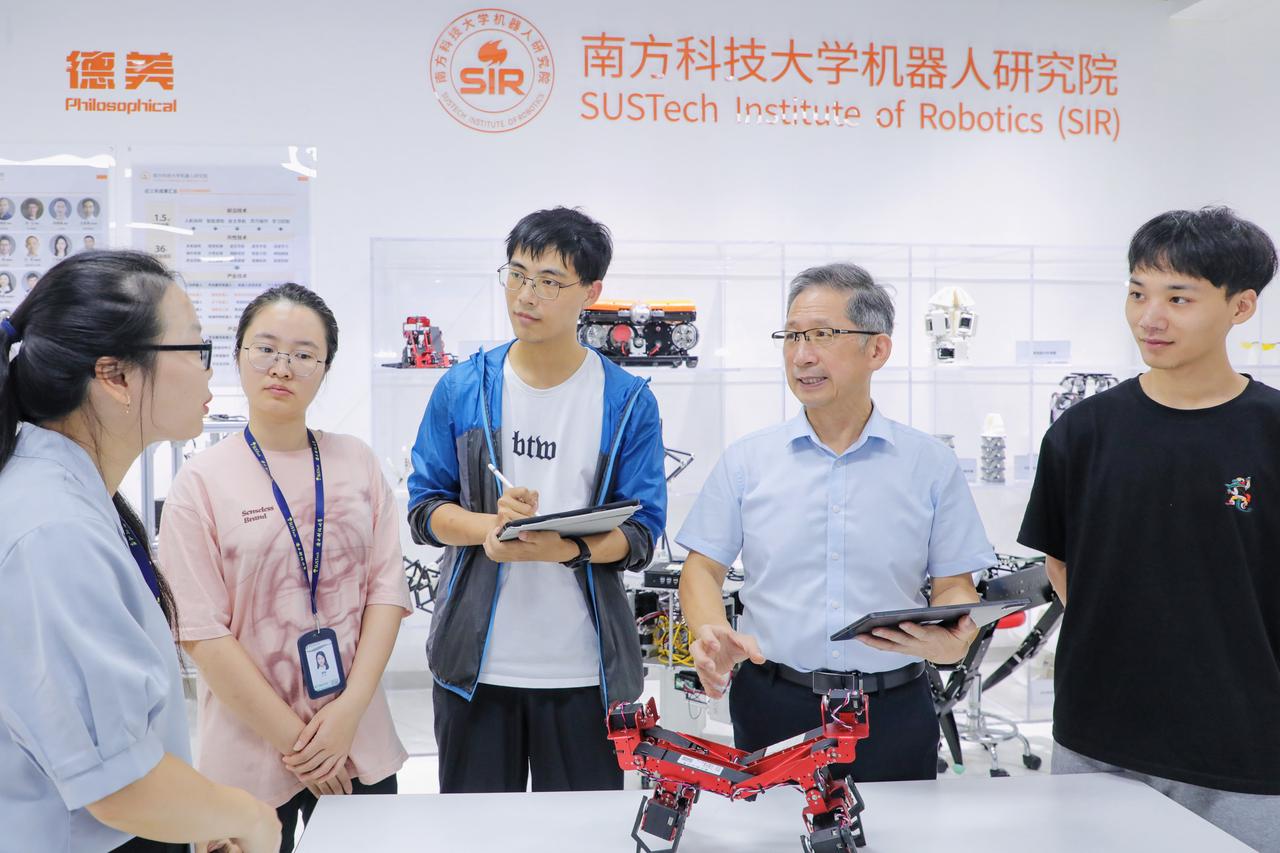
"At SUSTech, knowledge is never confined to the classroom—it sparks in the soft glow of lab instruments, flows through intellectual exchanges in a mentor's office, and shines most vividly in the bright, passionate eyes of students deep in late-night conversation in the college halls."
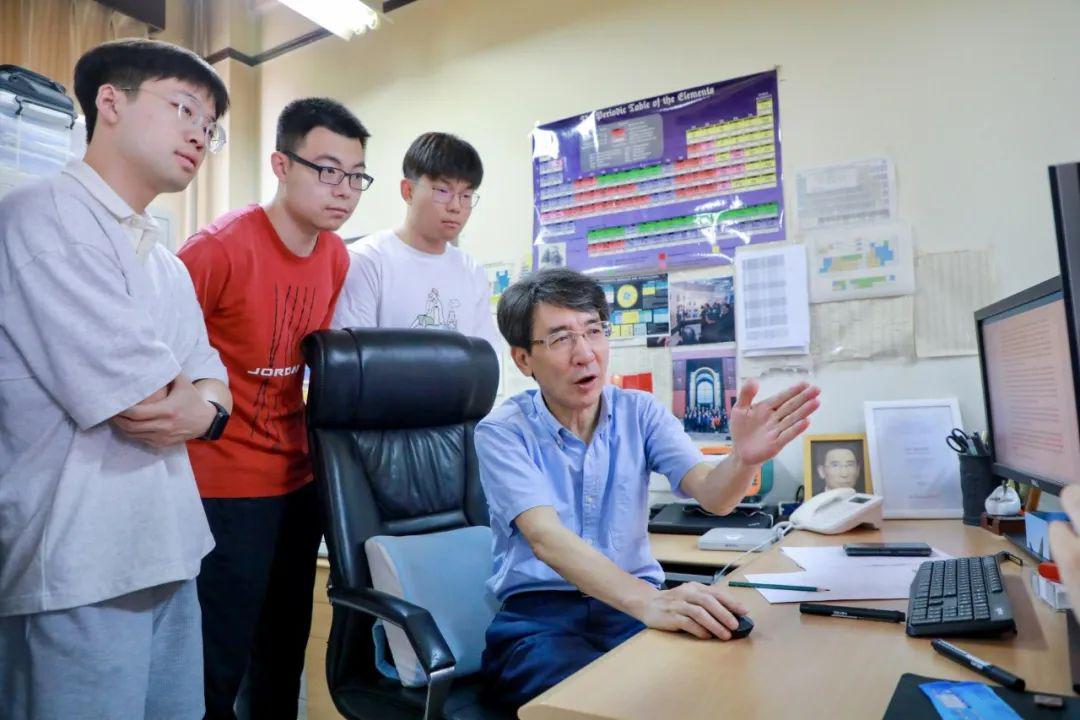
After the 2023 National Highest Science and Technology Award ceremony, the lights in Academician Qikun XUE's laboratory remained steadily aglow. This scholar—who also holds the roles of President of SUSTech and physicist—continues to cherish a particular "moment of true authority": competing with his students in needle-tip fabrication techniques.
Breakthroughs in fundamental scientific research cannot be achieved by planning alone. They require students to possess focus, curiosity that lifts the fog and a sense of mission to persevere and tackle problems boldly. [4]
The mentor's role is to cultivate a scientific spirit in students.
Source: SUSTech News
Qikun XUE once shared:
"Although my students may surpass me in areas such as reading speed, English proficiency, and physics knowledge, it is scientific spirit that I, as a mentor, must focus on cultivating. Only this way can I guide them more effectively.[5]
Faced with significant obstacles or slow progress in experiments, how do we keep students persistent? I believe encouragement is indispensable. We must let them know they’re doing well enough. Meanwhile, communication with students is crucial—by analysing problems together and finding solutions, we can overcome difficulties as a team."[6]
In April 2025, exciting research news from the Department of Electronic and Electrical Engineering at SUSTech drew campus-wide attention. A team of undergraduate students achieved a breakthrough in their paper Active Terahertz Nonlocal Metasurfaces With Liquid Crystal Elastomers. Under faculty guidance, the students took primary responsibility for the project's theoretical research, computation, sample preparation, experimental testing, and data analysis. [7]
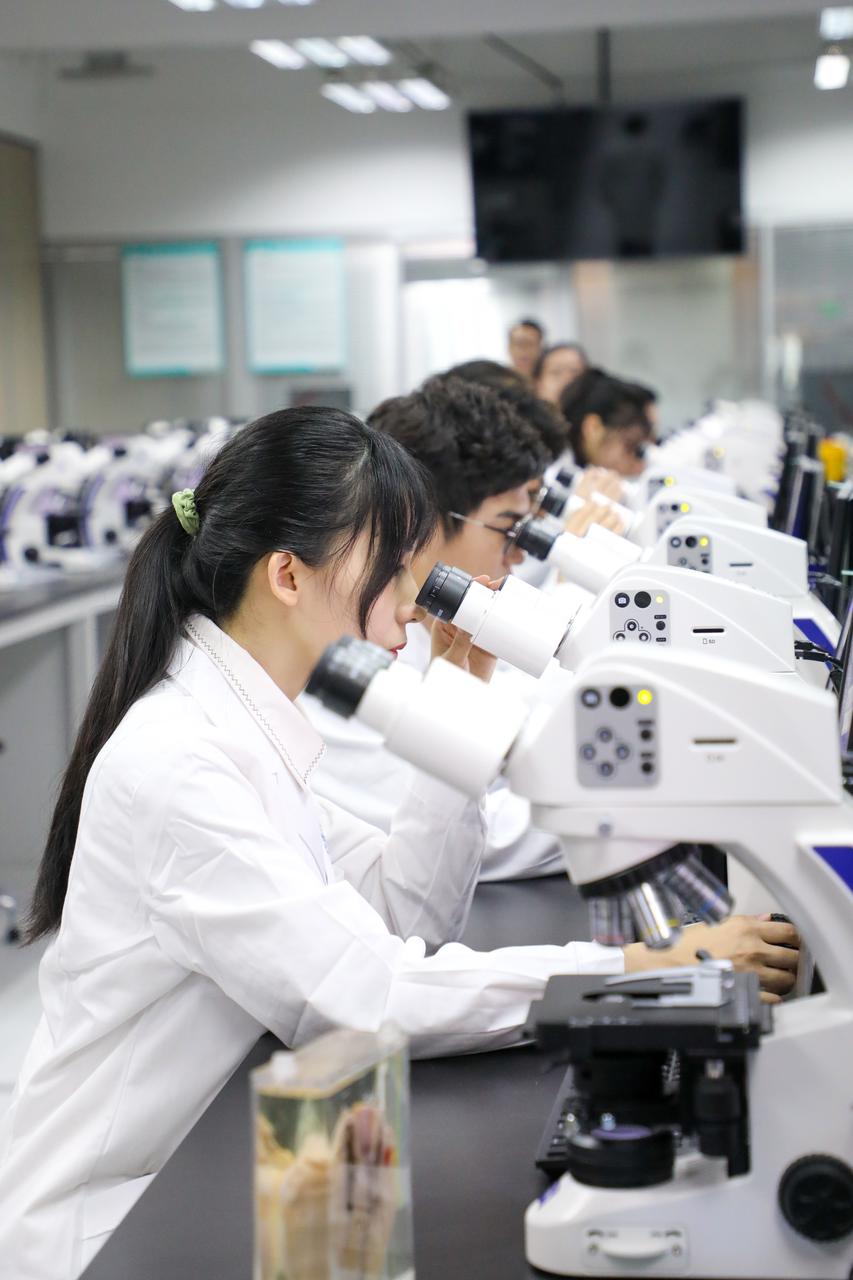
This model of research-led education has become a distinctive feature across departments at SUSTech. In the Chemistry Department, for instance, PI Professor Haiping XIA guides students in working with dragon-shaped molecular models—"Carbolong Chemistry" is not only a cutting-edge research topic but also a vivid tool for cultivating scientific thinking. At SUSTech, it is common for students to proactively engage with their mentors in the pursuit of research. Fostering innovation, critical thinking, and interdisciplinary collaboration is a core focus of the Department of Chemistry. Since its founding, SUSTech chemistry undergraduate alumni have contributed to over 150 papers in leading journals, and as first authors in nearly 30 papers. [8]
Source: SUSTech News
The innovative residential college system further sparks interdisciplinary synergy. For example, a materials science professor mentors biology students in developing AI diagnostic tools. At SUSTech, faculty evaluation metrics allocate up to 30% weight to "student breakthrough achievements". As one professor puts it, "Here, authority doesn't come from titles, but from the ability to keep pace with students' intellectual leaps." Beyond solid theoretical grounding, there is heightened focus on developing students' inquiry and innovation skills—equipping them with capabilities in fundamental research, applied research, and science and technology management. At SUSTech, mentors take an interest-driven approach, guiding students break through perceived limits, allowing them to thrive through inquiry-based research.
"Scientific research is not a solitary pursuit, but a journey of continual struggle with problems—explored together with mentors and peers."
Entering the era of artificial intelligence, the relationship between teachers and students in higher education is undergoing profound changes. Against this backdrop, SUSTech has explored its journey in AI education and AI talent cultivation since 2016. After nearly a decade of development, artificial intelligence education has blossomed across all 28 departments, with over half offering specialised or general courses in AI, machine learning, and deep learning. As AI education continues to deepen, SUSTech has established programmes in Automation, Intelligent Science and Technology, Robotics Engineering, and Data Science—providing diverse development pathways for students with varied interests.
In August 2024, the university officially launched the "Advanced Institute of Artificial Intelligence", integrating existing AI talent and resources while building bridges for deep university-enterprise collaboration. [2]
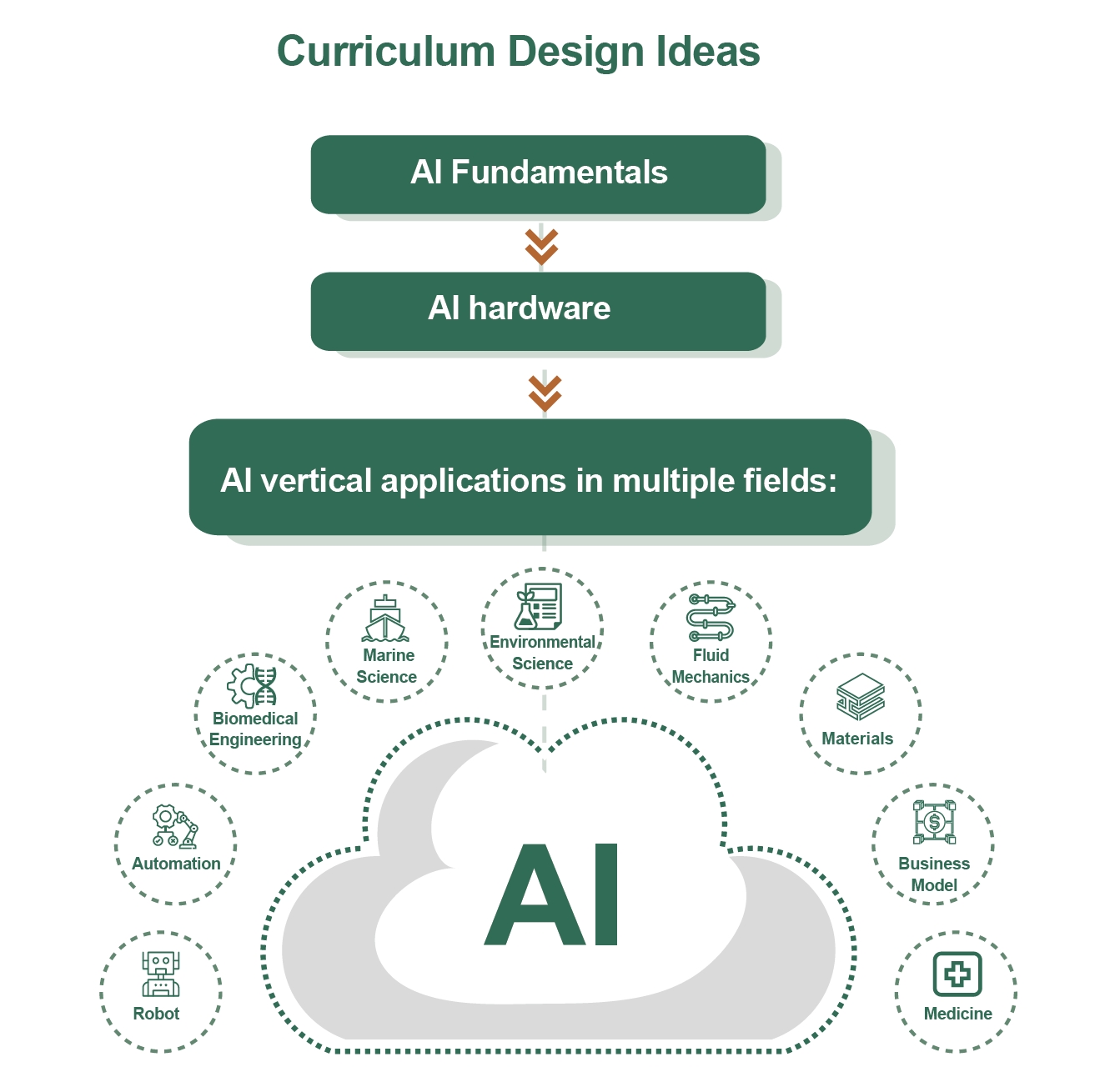
On 17th February 2025, as the spring semester began, the new general education course Artificial Intelligence and Applications held its first lecture. Aimed at first-year students, the course features collaborative teaching from 14 faculty members from different departments—including statistics, computer science, and microelectronics—covering both the foundational logic and vertical applications of AI. It is designed to cultivate interdisciplinary thinking and help students understand and apply AI technologies across a wide range of disciplines—nurturing a new generation of innovative talents equipped to meet future societal needs. [9]
From the "faculty mentorship system" to the "residential college system", from "project-based learning" to "immersive research", students' growth is no longer a straight line from classroom to career. Instead, it becomes a multidimensional journey—one deeply intertwined with research and guided by close collaboration with mentors. Here, the traditional barriers between "teaching" and "learning" are continuously broken: those who lecture are also those who ignite the flames of thought; those who seek knowledge in classrooms are equally pioneers in the frontiers of innovation.
This cutting-edge institution demonstrates a fresh educational narrative: It is no longer just about organisational structure, but a shared journey of exploration into the unknown, hand in hand between faculty and students.
References
[1] 刁雯蕙, “新型钠电池正极材料实现十万次超长循环寿命,” 科学网, 2025. https://news.sciencenet.cn/htmlnews/2025/3/540949.shtm (accessed May 16, 2025).
[2] 薛其坤, et al., “人工智能赋能高等教育创新发展的南科大‘样本’分析,” 中国高等教育, no. 24, pp. 19–24, 2024.
[3] 张璞, “南方科技大学:构建新型学工体系 筑牢立德树人之基,” 南方科技大学新闻网, 2023. https://newshub.sustech.edu.cn/html/202309/44114.html (accessed Apr. 24, 2025).
[4] 闪电新闻 王志芹, “我与中关村论坛 | 薛其坤:中国创新能力进入世界第一梯队,” 财经头条, 2025. https://cj.sina.com.cn/articles/view/1893761531/v70e081fb02002splm (accessed Apr. 24, 2025).
[5]“ 薛其坤:科学突破与人才培养,” 光明日报, 2021. https://baijiahao.baidu.com/s?id=1697870237334069997&wfr=spider&for=pc(accessed Apr. 24, 2025).
[6] 焦子宇, “他是杰出战略科学家,更是青年梦想守护者,” 深圳特区报, 2024. https://baijiahao.baidu.com/s?id=1802765344599401845&wfr=spider&for=pc (accessed Apr. 24, 2025).
[7] 电子与电气工程系, “南科大电子系本科生在太赫兹超表面领域取得研究进展 ,” 南方科技大学新闻网, 2025. https://newshub.sustech.edu.cn/html/202503/46252.html (accessed Apr. 24, 2025).
[8] 南科大化学系, “院系巡礼 | 南方科技大学化学系,” 南科大招生, 2022. https://mp.weixin.qq.com/s?__biz=Mzg2MjAyNDc1MA%3D%3D&mid=2247517240&idx=1&sn=462b9a5d564a04126a01d1e142eb1c47&chksm=cf3254f5f5c8d608159731cf6404407cc45e31dfad35220cb64eb77497d96e630ac82b24c27e&scene=27 (accessed Apr. 24, 2025).
[9] “‘人工智能+’赋能未来 南科大着力培养具有全球视野和创新能力的AI 人才- 南方科技大学新闻网,” 南方科技大学新闻网, 2025. https://newshub.sustech.edu.cn/html/202503/46241.html (accessed Apr. 24, 2025).

- BGI College - A Frontier Institute for Industry-Education Integration: Shaping Life Science Talents in Practice
- Shenzhen University of Advanced Technology (SUAT)— Vertical Innovation and Research Transformation: SUAT Unlocks the Practical Code of “Integrating Research and Education, Bridging Industry and Academia”
- City University of Hong Kong — Students' Angel Investors: HK Tech 300 Inspires Youth Innovation
- The Hong Kong University of Science and Technology (HKUST)—— Competitions and Startup Incubators: Developing Youg Leaders with Science and Technology talent in the Greater Bay Area
- Southern University of Science and Technology (SUSTech) – Extending Classrooms to Laboratories: Cultivating Top-tier Innovative Talent Through Immersive Research